Termite Prevention Checklist: Season by Season
Termite prevention isn't one big job. It's a dozen small ones spread across the year, each done when it makes the most sense. This checklist puts them in order by season, with a short list of yearly tasks, so nothing slides for five years until the swarmers show up.
The short version
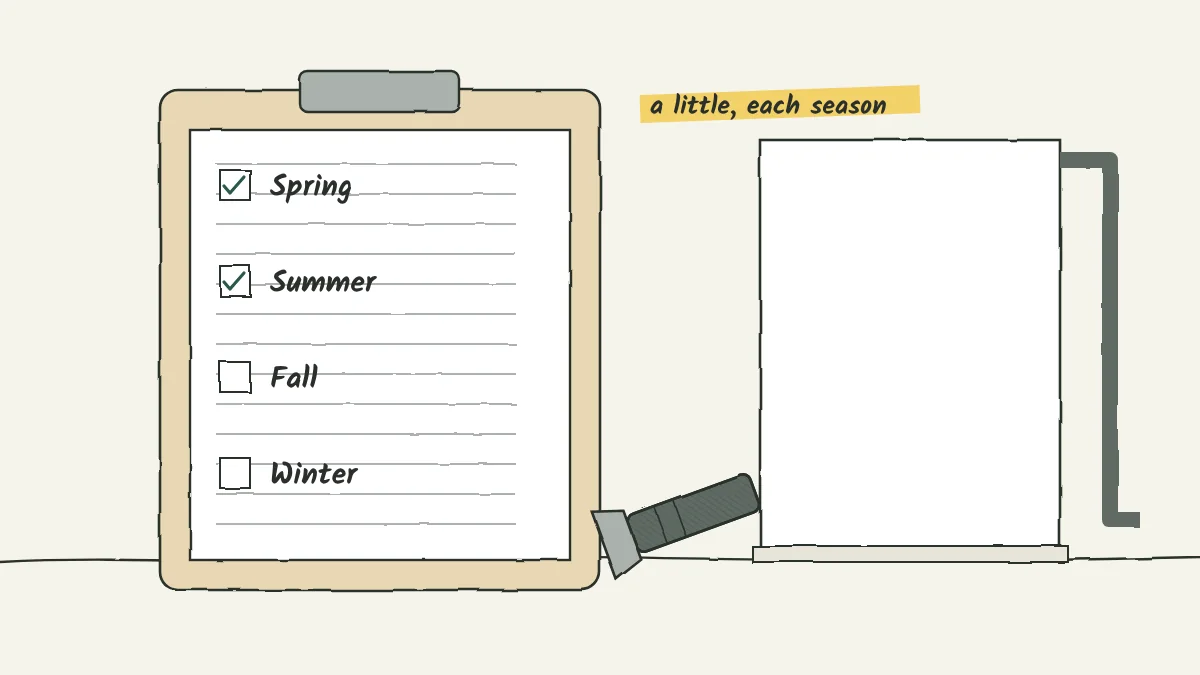
Spring: watch windowsills for swarmers and shed wings, and walk the foundation for mud tubes. Summer: check sprinklers, gutters and the AC drip line. Fall: clear gutters, stack firewood away from the house and check crawlspace vents. Winter: inspect the basement or crawlspace. Every year: a professional inspection, renewal of any termite warranty and a look at your treatment records.
On this page
How to use this checklist
Most termite damage builds slowly. Michigan State University says winged termites come from a colony that has likely been there 5 to 7 years, and NC State Extension recommends homeowner "mini-inspections" during routine maintenance alongside professional inspections. A checklist turns routine maintenance into those mini-inspections.
Adjust the timing to your region. Swarm months differ by species and climate; our swarm season guide shows the months for your termites. In warm southern states, summer jobs can stretch from spring into fall.
The year at a glance
Each season's most important jobs. Details follow below.
| Season | Check | Why |
|---|---|---|
| Spring | Windowsills, doors and light fixtures for swarmers and wings | Swarms are the most common way infestations are found |
| Spring | The foundation, all the way around, for mud tubes | Tubes show where termites cross into the house |
| Summer | Sprinklers, hoses and the AC condensate line | Water at the foundation helps termites |
| Summer | Mulch depth and the gap at the siding | Thin mulch dries; a gap keeps tubes visible |
| Fall | Gutters, downspouts and splash blocks | Keeps water away from the foundation through winter |
| Fall | Firewood placement | Stacks against the house hide termite routes |
| Winter | Basement walls, sill plates and the crawlspace | Easier to see with plants dormant; warm spots stay active |
| Any time | Professional inspection and warranty renewal | Catches what you can't see and keeps coverage current |
Keep a dated note of what you find. Comparing years is how slow changes become obvious.
Spring: swarm season
-
Watch the windows
Check windowsills, door thresholds and light fixtures every few days. Swarmers fly to light, and Kentucky's extension entomologist says swarmers indoors almost always mean an infestation.
-
Save a sample
Put a few swarmers or wings in a sealed bag or a jar of rubbing alcohol for identification. See flying ants vs termites.
-
Walk the foundation
Look for pencil-thick mud tubes on the foundation, piers, steps and the bottom of the siding. Pull back plants and mulch where you can't see the wall.
-
Check the porch and deck joints
Look where porches, decks and steps meet the house. See termites in fences and decks.
For your seasonal checks
As an Amazon Associate I earn from qualifying purchases.
-
View on Amazon
Bright LED flashlight, 1,000+ lumens
The one tool that really matters. A tight, bright beam shows mud tube texture and wing piles in dark corners.
-
View on Amazon
LED headlamp
Keeps both hands free for probing and photographing in a crawlspace or attic.
-
View on Amazon
Awl or flat-head screwdriver
Press it into suspect wood. Healthy wood fights back. Eaten wood gives way like a stale cracker.
-
View on Amazon
Pin-type wood moisture meter
Wood that reads above about 20% is wet enough to invite rot and termites. Great for sills and subfloors.
Summer: water
-
Aim the sprinklers
The University of Florida says irrigation heads should be at least 1 foot from the wall and not spray it.
-
Follow the drip lines
Check the AC condensate line, hose bibs and drip irrigation for leaks at the foundation.
-
Reset the mulch
Keep mulch thin near the house and pulled back from the siding. Our landscaping guide has the numbers.
-
Look under the deck
Clear leaves and stored wood from under decks and porches.
Fall: get ready for winter
-
Clean gutters and downspouts
University of Kentucky entomologist Michael Potter lists working gutters, downspouts and splash blocks among the basic moisture fixes.
-
Move the firewood
Purdue says to keep firewood at least 3 feet from the house and off the ground. See firewood and termites.
-
Clear the crawlspace vents
Potter says to keep vents clear of plants, leaves and debris so the crawlspace can dry.
-
Remove wood from the yard
Pull scrap lumber, old stakes and stumps near the house where practical.
Winter: indoors and underneath
-
Inspect the basement or crawlspace
Look at sill plates, rim joists and piers. Michigan State says basement tubes often show up first on rim joists and sill plates.
-
Probe suspect wood
Push a screwdriver or awl into soft or blistered spots. Check moisture with a meter; see crawlspace moisture and termites.
-
Don't ignore a winter swarm
Ohio State notes a building's heat can occasionally trigger a winter swarm. Winged termites indoors in January still mean a colony nearby.
Once a year, every year
Some jobs don't belong to a season. Get a professional inspection each year; North Carolina's agriculture department says thorough inspections should be done annually. If you have a termite warranty, keep it current: Potter notes coverage usually depends on paying the annual renewal. And keep your treatment records together, including any diagram of where the house was treated, so the next inspector knows what was done. See termite bonds and how often to get a termite inspection.
Making the checklist stick
Do
- Put seasonal reminders on your calendar
- Keep a dated log of what you check and find
- Bag swarmers or wings for identification
- Schedule the professional inspection at the same time each year
Don't
- Wait for swarmers to start checking
- Let the warranty lapse to save the renewal fee
- Spray store-bought insecticide on mud tubes and call it done
- Cover foundation walls so they can't be inspected
Questions people ask
How often should I check my house for termites?
Do quick checks each season as part of routine maintenance, with extra attention to windowsills during swarm season, and get a professional inspection once a year.
What should a termite prevention checklist include?
Swarm and mud tube checks in spring, water and mulch checks in summer, gutters and firewood in fall, a basement or crawlspace look in winter, plus a yearly professional inspection and warranty renewal.
When is the best time to check for termites?
Spring, when most termites swarm, is the most important time to watch, but mud tubes and damage can be found any time of year.
Can termites be active in winter?
They can be. Termites in soil under a heated house can stay active, and Ohio State notes building heat can occasionally trigger a winter swarm.
Keep reading
Termites in your state
Sources
- University of Kentucky Entomology Entfact-605: Protecting your home from termites (Potter, 2018)
- University of Kentucky Entomology Entfact-604 on termite control (Potter, revised 2018)
- Michigan State University Extension: Eastern subterranean termites
- NC State Extension: Termites, preventing problems in existing homes (revised 2022)
- NCDA&CS: Post-construction subterranean termite control
- University of Florida IFAS ENY-832: The facts about termites and mulch (Oi and Wheeler, 2006)
- Purdue Extension E-67-W: Insects in firewood (Gibb, 2018)
- Ohio State University Plant and Pest Diagnostic Clinic (BYGL): Eastern subterranean termite (2024)