How Often Should You Get a Termite Inspection?
Termites are slow, quiet and hidden, which is exactly why the inspection schedule matters more than any single treatment. The short answer is once a year. The longer answer depends on where you live, how old your treatment is and what's going on with your house.
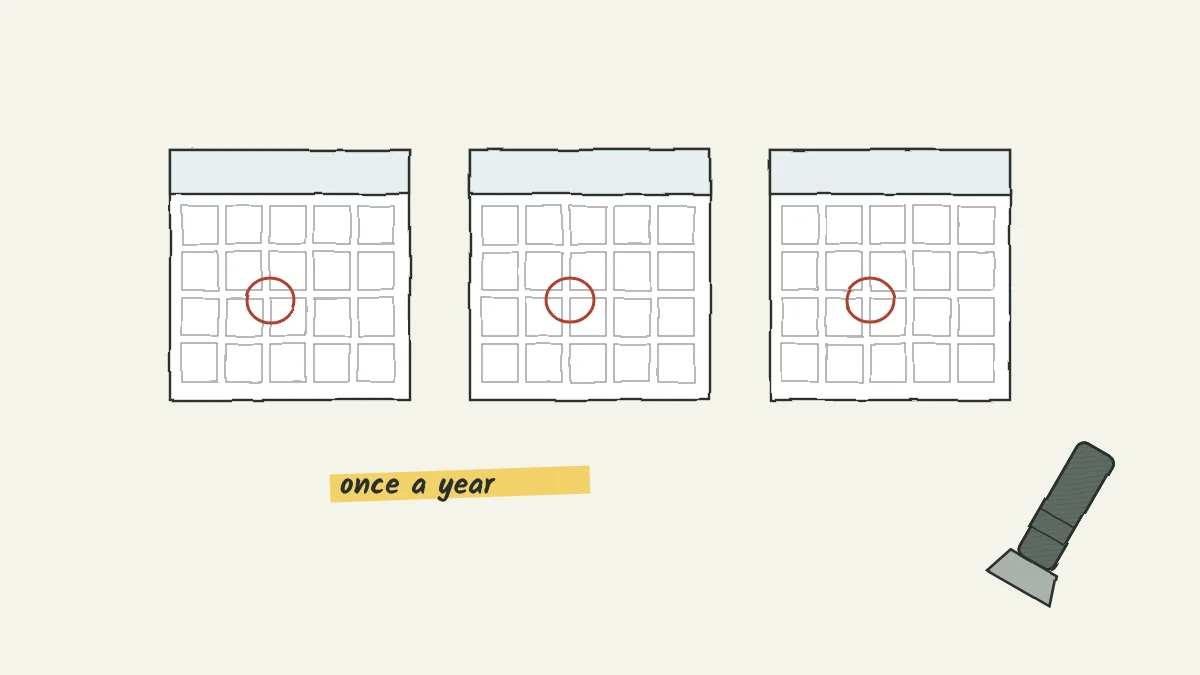
The short version
Once a year is the standard in termite country. University of Tennessee Extension recommends a professional inspection at least annually, North Carolina's agriculture department advises yearly checks, and Tennessee and Georgia build annual inspections into many termite contracts. Inspect sooner after a swarm, a leak, a remodel or a home purchase.
On this page
Why once a year
The case for an annual inspection comes from how termites work. They're hidden in soil and wood, they damage it slowly, and they're rarely seen until the damage is advanced. A yearly look by someone who crawls the crawlspace and checks the foundation catches mud tubes and early damage while repairs are still small.
Extension services say it directly. University of Tennessee Extension recommends having a professional inspect at least annually, probing wood near the soil and checking for mud tubes and moisture, and says an annual inspection renewal is usually worth buying. North Carolina's agriculture department advises yearly checks for shelter tubes, discarded wings and adult termites. NC State's Formosan update calls periodic inspection the most important way to protect a structure.
How often, by situation
A general schedule built from extension and state guidance. Your contract or your state's rules may set their own.
| Situation | How often | Why |
|---|---|---|
| Home in moderate to heavy termite country | Once a year | Catches tubes and early damage while they're small |
| Under a termite contract | As the contract says, usually yearly | Tennessee and Georgia build annual inspections into many contracts |
| Bait system | As the product label requires | Stations must be checked on schedule to work |
| After a swarm indoors | Right away | A swarm inside means a colony in or under the house |
| After a leak, flood or remodel | Soon after | Moisture and disturbed soil invite termites |
| Buying a house | Every purchase | Sale reports are dated; FHA treats a clean one as good for 90 days |
| Lower-pressure areas | Ask your county extension office | Risk varies a lot by region |
Check your area's pressure on the termite infestation probability zones map.
What state rules require
Some states make the annual inspection part of the deal. Tennessee's termite rule requires companies to inspect each contracted property every year and record the date, and to retreat and redraw the graph if new activity turns up. Georgia's rules say warranty-only contracts include a yearly inspection. Contracts elsewhere often include one too, so check yours before you assume the renewal is just a fee. See termite bond.
Treatments age
A treatment isn't permanent protection. Texas A&M AgriLife Extension's testing found registered termiticides last from four to ten years in the soil, and bait systems need continued service to keep protecting a house. NC State notes that a house under 20 years old that hasn't been treated in about 10 years is more likely to become infested, because the original soil barrier may have weakened.
That's why the inspection matters most in the years after the warranty lapses. Texas A&M suggests keeping extended coverage at least for the first one to two years after treatment, and Penn State suggests the same. After that, an annual inspection is how you find out the barrier has a gap. How long each method lasts is in how long termite treatment lasts.
Check yourself in between
A professional inspection once a year doesn't mean ignoring the house the rest of the time. In swarm season, look for wings on windowsills and around lights. A few times a year, walk the foundation and look for mud tubes, especially behind shrubs and at plumbing entries, and check the crawlspace after heavy rain. The full walkthrough is in how to inspect for termites.
Keeping on schedule
Do
- Put the annual inspection date on your calendar
- Read the report, including the areas they couldn't reach
- Get an inspection after a swarm, leak or remodel
- Keep every inspection report with your house papers
Don't
- Let a warranty lapse without a plan for inspections
- Assume an old treatment still protects the house
- Skip the crawlspace because it's unpleasant
- Treat a bait system as set-and-forget
Questions people ask
How often should you get a termite inspection?
Once a year in most of the country where termites are common. University of Tennessee Extension recommends a professional inspection at least annually, and many termite contracts include one.
Is an annual termite inspection worth it?
Usually, yes. Termite damage is slow and hidden, so a yearly inspection catches it while it's small and cheap to fix. UT Extension says an annual inspection renewal is usually worth buying.
Do I need a termite inspection if my house was treated?
Yes. Termiticides in the soil last roughly four to ten years, according to Texas A&M testing, and baits need ongoing service. Inspections tell you when protection has worn off or been bypassed.
When should I get a termite inspection outside the yearly schedule?
After a swarm inside the house, after a leak or flood, after remodeling or soil work near the foundation, and whenever you're buying a house.
Keep reading
Termites in your state
Sources
- UT Extension PB1344: Subterranean termite control
- NCDA&CS: Post-construction subterranean termite control
- NC State Extension: Update on Formosan termites in NC (2018)
- Tennessee Rule 0080-09-04-.08: Requirements of specific categories and pesticides
- Georgia Department of Agriculture: 2014 WDO rule changes
- Texas A&M AgriLife Extension: Frequently asked questions about subterranean termite control
- Penn State Extension: Eastern subterranean termites
- HUD: HOC reference guide, wood destroying insect inspections