Termites in Fences and Decks: The Wood That Touches Dirt
A deck or fence is often the only wood on a property that's sunk straight into the soil, and a deck is bolted to the house besides. That makes both a convenient bridge for subterranean termites. Here's where termites get into decks and fences, what the treated-wood ratings mean, and how to keep the problem outside.
The short version
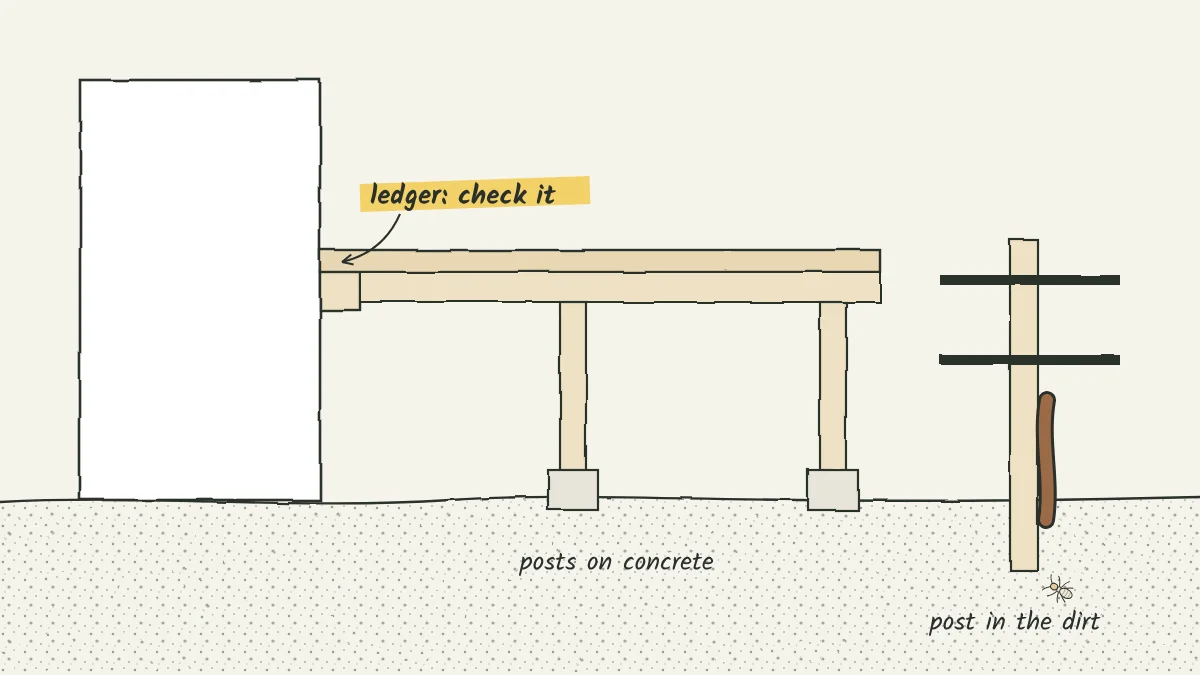
Termites reach decks and fences through posts in the soil, stairs and skirting that touch the ground, and debris under the deck. The risk to the house is the deck ledger and flashing where the deck meets the wall. Use lumber rated for ground contact (UC4A or higher) for posts, set posts on concrete where you can, keep soil and debris from building up under the deck and check the deck-to-house joint every year.
On this page
Why decks and fences get termites
Subterranean termites live in the soil and look for wood they can reach without leaving it. A fence post or deck post is the perfect find: wood that goes straight into moist dirt, often untouched for years. Untreated posts don't last long where termites and decay are active. In a U.S. Forest Products Laboratory post test in southern Mississippi, a high decay and termite hazard site, untreated southern pine posts lasted about two years. Posts treated with the best-performing preservatives were projected to last more than 60.
A termite-eaten fence is a repair bill. A termite-eaten deck can be more, because a deck is attached to the house. Michigan State University Extension lists improper flashing between the home and attached porches or decks among the building flaws that lead to termite damage, since it lets water, and termites, reach the frame.
Where termites get into a deck or fence
The parts most at risk, and why.
| Part | Why it's at risk |
|---|---|
| Posts set in soil | Wood in constant contact with moist dirt |
| Stair stringers resting on the ground | Wood sitting directly on soil, often at the house |
| Skirting and lattice to the ground | Hides the area under the deck and touches soil |
| Ledger board at the house | Joins the deck to the house frame; leaks invite decay |
| Debris under the deck | Leaves, scrap wood and stored lumber feed termites |
| Fence posts at the house | A buried post inches from the foundation |
Under a low deck is one of the hardest spots for an inspector to see. Keep a way in.
Use the right treated wood
Pressure-treated lumber is sold with a use category from the American Wood Protection Association. Lumber marked for above ground use, such as UC3B, isn't meant for soil. AWPA's residential guide puts structural posts, the ledger, stairs touching the ground and planter boxes in UC4A or higher, the ground-contact rating. It also says joists and beams that are hard to replace and critical to the structure, or that sit in conditions close to ground contact, should get ground-contact treatment even when they're off the ground.
Treated wood isn't a guarantee. University of Kentucky entomologist Michael Potter notes pressure-treated wood is still vulnerable, so it doesn't replace the other steps, and LSU AgCenter says termites may eventually get inside even creosote-treated posts. Termites can also travel over treated wood, through cracks and around it, to reach untreated wood above. More in termite-resistant wood.
For checking deck posts and fence lines
As an Amazon Associate I earn from qualifying purchases.
-
View on Amazon
Awl or flat-head screwdriver
Press it into suspect wood. Healthy wood fights back. Eaten wood gives way like a stale cracker.
-
View on Amazon
Bright LED flashlight, 1,000+ lumens
The one tool that really matters. A tight, bright beam shows mud tube texture and wing piles in dark corners.
-
View on Amazon
Knee pads
Only if you have a crawlspace. You inspect twice as carefully when you're not kneeling on gravel.
Get the posts out of the dirt
The surest fix is not burying wood at all. Potter suggests setting steps and posts on a concrete base to keep wood out of soil contact. For new decks, that means posts on concrete piers or post bases above grade. For fences, metal post anchors or concrete footings that extend above the soil help.
Capping hollow block helps too. LSU AgCenter says concrete block piers should be capped with solid concrete, a metal shield or steel termite mesh, because termites can move unseen through hollow block, and that wooden posts should be capped as well. A cap won't stop termites, but it forces them to build mud tubes where you can see them. See physical termite barriers.
Checking a deck for termites
-
Start at the house
Look at the ledger board and the siding just above and below it. Stains, soft wood or mud tubes here are the top priority because they touch the house frame.
-
Probe the posts at the soil line
Push an awl or screwdriver into each post where it meets the ground. Termite-damaged wood gives way and may show mud-lined galleries along the grain.
-
Look under the deck
Check stair stringers, the bottom of the skirting and any wood lying on the soil. Remove leaves, scrap lumber and stored firewood.
-
Follow the fence to the house
Check the last posts nearest the house. A post with mud tubes inches from the foundation is a reason to get the house inspected.
-
Write it down
Note what you found and when. Next year's check is more useful if you can compare.
Decks, fences and termites
Do
- Use ground-contact (UC4A or higher) lumber for posts and ledgers
- Set posts on concrete above grade where you can
- Keep the area under the deck clear and dry
- Leave an access panel in deck skirting
Don't
- Use above-ground lumber for anything touching soil
- Run a wood fence tight against the foundation
- Store firewood or lumber under the deck
- Let soil or mulch build up against deck posts
Questions people ask
Can termites get into my house through my deck?
They can. A deck is attached to the house, and MSU Extension lists poor flashing between homes and attached decks or porches among the conditions behind termite damage. Check the ledger area every year.
What treated wood should I use for deck posts?
Lumber rated for ground contact, UC4A or higher. The American Wood Protection Association puts structural posts and ledgers in that category.
How long does an untreated fence post last with termites?
Not long in a high-hazard area. In a U.S. Forest Products Laboratory test in southern Mississippi, untreated southern pine posts lasted about two years.
Should I treat my fence for termites?
Focus on the posts near the house and on keeping wood out of the soil. Replace posts with ground-contact lumber or set them on concrete, and get the house inspected if posts near the foundation have termites.
Keep reading
Termites in your state
Sources
- NCDA&CS: Post-construction subterranean termite control
- Freeman and others, USDA Forest Service: A comparison of wood preservatives in posts in southern Mississippi (2005)
- Michigan State University Extension: Eastern subterranean termites
- American Wood Protection Association: Residential use category infographic (2021)
- University of Kentucky Entomology Entfact-605: Protecting your home from termites (Potter, 2018)
- LSU AgCenter: Rebuilding homes provides opportunities for termite protection (Henderson and Skinner, 2007)
- NC State Extension: Termites, preventing problems in existing homes (2022)