Termite-Resistant Wood: Treated, Cedar, Redwood and More
No wood is termite-proof forever. Some woods are far less appealing to termites than others, and treated lumber can resist them for decades, as long as it's used the right way. Here's what research says about treated and naturally resistant wood, and the mistakes that cancel out the protection.
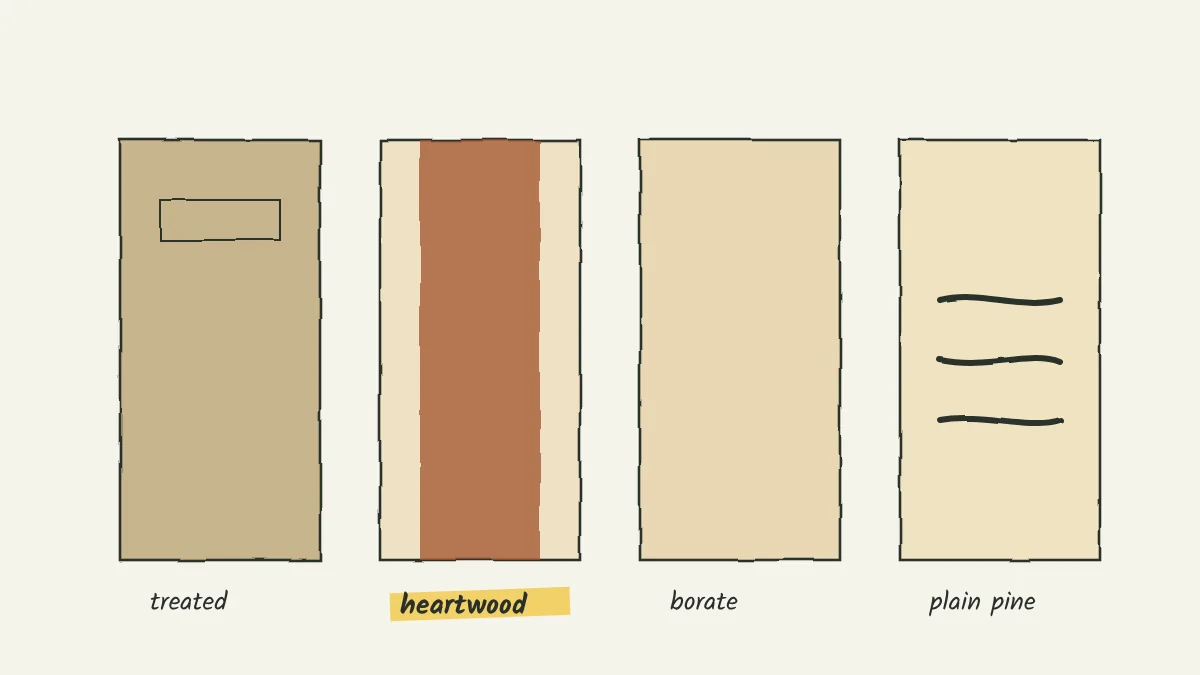
The short version
Pressure-treated wood and naturally resistant heartwood both reduce termite attack, but neither is a guarantee. In a USDA lab test, redwood, teak, Alaskan yellow cedar, Honduran mahogany, Peruvian walnut and Brazilian jatoba killed most Formosan termites, while southern yellow pine and spruce were favorites. Only heartwood resists; sapwood doesn't. Cut ends of treated lumber need retreatment.
On this page
Two ways wood resists termites
Wood resists termites in one of two ways. Treated wood has a preservative forced or soaked into it: pressure treatment for lumber, or a borate applied to framing. Naturally durable wood contains its own chemicals that repel or poison termites. University of Hawaii entomologist Ken Grace lists both, along with steel framing, as termite-resistant building materials, and the building code accepts both as termite protection in areas where it's required. See building code termite requirements.
Which woods held up in a USDA test
From a USDA Agricultural Research Service laboratory study of commercial lumber against Formosan subterranean termites, reported by Entomology Today in 2016. In a six-week no-choice test, the six resistant woods killed 75 percent or more of the termites on average.
| Wood | Result |
|---|---|
| Redwood | Resistant |
| Teak | Resistant, and the least palatable; termites on teak did worse than termites given no wood |
| Alaskan yellow cedar | Resistant |
| Honduran mahogany | Resistant |
| Peruvian walnut | Resistant |
| Brazilian jatoba | Resistant |
| Birch, red oak | Not among the resistant group |
| Southern yellow pine, spruce | Most palatable to the termites |
This was a laboratory test with one termite species and no other food choice. Field conditions, other species and the part of the tree the lumber came from can change results.
Heartwood, not sapwood
The resistance in naturally durable species is in the heartwood, the darker center of the trunk. Grace states it plainly: only heartwood is resistant to termites and decay; sapwood is not durable. A cedar or redwood board with a pale streak along its edge has sapwood there, and that's the part termites will eat. When you buy naturally durable lumber for termite resistance, ask for heartwood grades and look at the boards.
Pressure-treated and borate-treated wood
Pressure-treated lumber is the standard choice for wood near or in the ground, and building codes require treated or naturally durable wood when framing sits closer to the soil than set clearances, such as 18 inches under floor joists in a crawlspace. Hawaii goes further and requires preservative-treated structural lumber above ground in new construction.
Treatment has limits that research makes clear:
- Penetration matters. A U.S. Forest Service study of treated spruce-pine-fir in Louisiana found termites went for the centers of end grain, where less preservative reached, and that some borate-treated pieces were attacked despite apparently complete penetration. Copper-arsenate-treated wood had the least penetration but resisted attack best in that test.
- Cut ends are weak spots. Under California's residential code, any cut, notch or hole made on site in treated lumber has to be treated again. The University of Kentucky warns that termites can still get at pressure-treated wood through cracks and cut ends, or by tubing over it.
- Borates belong indoors. Borate-treated framing protected sill plates for at least five years in a University of Hawaii field test, but borates wash out in rain and soil. See boric acid for termites.
Using resistant wood well
-
Match the treatment to the use
Wood in soil contact needs a ground-contact preservative rating; above-ground wood can use a lighter treatment.
-
Buy heartwood if you go natural
Look for dark wood all the way across the board, with no pale sapwood edges.
-
Treat every cut
Brush preservative on cut ends, notches and holes in treated lumber.
-
Keep it out of the dirt anyway
Even resistant posts last longer on a concrete footing or metal base than buried in soil.
-
Keep inspecting
Resistant wood slows termites; it doesn't replace an annual inspection.
Termite-resistant wood
Do
- Use ground-contact treated lumber for anything touching soil
- Choose heartwood grades of naturally durable species
- Retreat cut ends and drill holes in treated wood
- Combine resistant wood with other termite protection
Don't
- Assume all cedar or redwood resists termites
- Use borate-treated wood outdoors or in soil
- Bury untreated wood near the house
- Skip inspections because the framing is treated
Questions people ask
What wood is naturally termite resistant?
In a USDA lab test against Formosan termites, redwood, teak, Alaskan yellow cedar, Honduran mahogany, Peruvian walnut and Brazilian jatoba were resistant. Only the heartwood of naturally durable species resists termites; sapwood doesn't.
Does pressure-treated wood stop termites?
It resists them, but not perfectly. Termites can attack untreated centers exposed at cut ends, get in through cracks, or tube over treated wood to reach untreated wood above it. Retreat cut ends and keep other protection in place.
Is cedar termite proof?
No. Some cedar heartwood resists termites, and Alaskan yellow cedar performed well in a USDA test, but sapwood isn't resistant and no wood is termite-proof in soil.
What wood do termites like most?
In the USDA test, southern yellow pine and spruce were the most palatable to Formosan termites, which is one reason untreated pine framing needs other protection.
Keep reading
Termites in your state
Sources
- Entomology Today: Some types of wood contain natural chemicals that are toxic to termites (2016)
- Grace, University of Hawaii: Termites in Hawaii (2009)
- Lebow and others, U.S. Forest Service: Formosan and native subterranean termite attack of pressure-treated SPF wood species exposed in Louisiana (2006)
- Tsunoda, Grace, Byrne and Morris: Effectiveness of disodium octaborate tetrahydrate in controlling subterranean termite attack and decay of house sill plates
- California Residential Code (2025) section R305, via GoCodebook
- Florida Building Commission: Declaratory statement staff analysis quoting FBC Residential R317 (2020 edition)
- Hawaii Administrative Rules: Amendments to the 2018 International Building Code, Section 50
- University of Kentucky Entomology: Protecting your home from termites (EF605, 2018)