Building Code Termite Requirements (IRC R318)
The building code treats termites as a design load, like wind or snow. In termite country, it decides how close wood can sit to the dirt, where foam insulation can go and what paperwork the builder hands the inspector. Here's how the residential code handles termites, and the places where states add their own rules.
The short version
The International Residential Code requires termite protection where its map shows termite damage, using soil treatment, baits, treated or naturally durable wood, physical barriers or steel framing. Separate decay rules set wood clearances from soil, such as 18 inches under floor joists. In very heavy termite areas, foam insulation can't go below grade. Florida and Hawaii add stricter rules.
On this page
Two code sections do the work
Most U.S. homes are built under a version of the International Residential Code, adopted state by state and often amended. Two neighboring sections handle termites:
- R317, protection against decay, sets how close wood can get to the soil, and where it has to be treated or naturally durable if it's closer. Decay rules matter for termites because the same damp, low wood is what subterranean termites find first.
- R318, protection against subterranean termites, requires termite protection in areas the code's maps show as subject to termite damage, and lists the acceptable methods.
California numbers the same rules differently: its residential code puts termite protection in section R305. Local building departments decide which edition applies. The City of Dallas, for example, has builders certify termite protection against R318 of the 2015 IRC.
Clearances the decay section sets
From R317.1 as printed in the 2020 Florida Building Code, Residential, which follows the IRC on these points. Wood closer than these distances must be treated or naturally durable.
| Wood member | Clearance from exposed ground |
|---|---|
| Floor joists or the bottom of a wood floor, in a crawlspace | 18 inches |
| Girders, in a crawlspace | 12 inches |
| Framing resting on a concrete or masonry exterior foundation wall | 8 inches |
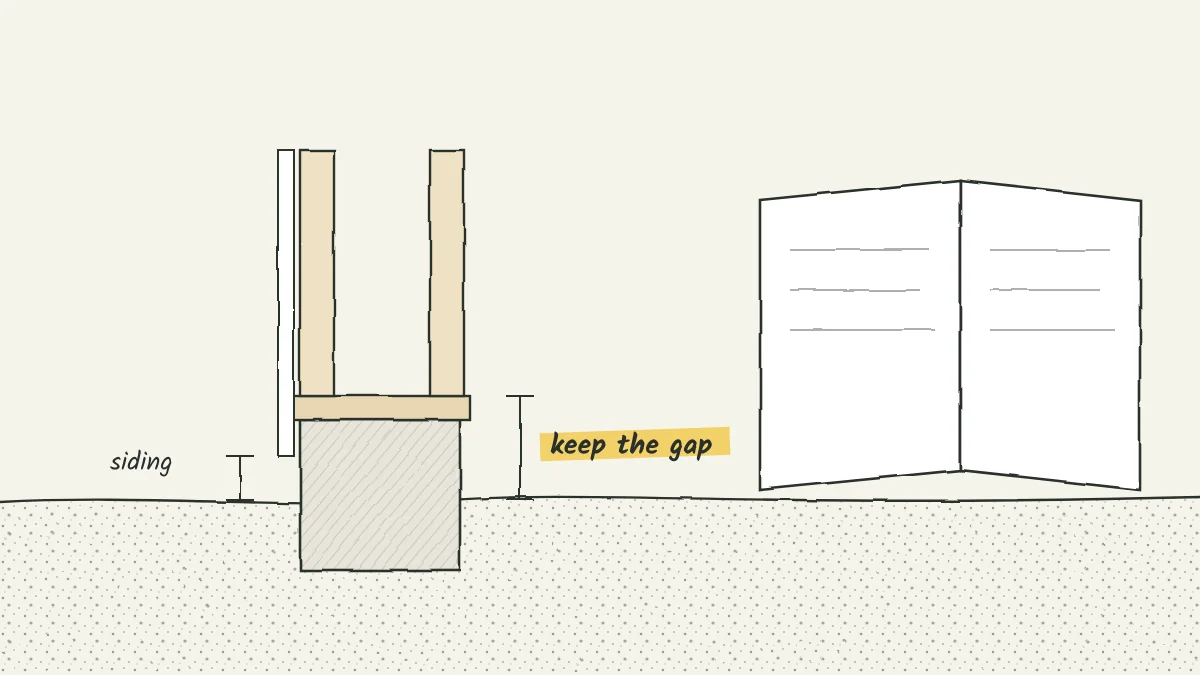
| Siding, sheathing and wall framing on the exterior | 6 inches |
These numbers are worth checking against your own house. Soil and mulch built up against the foundation over the years can erase a 6-inch gap that met code when the house was new.
R318: protection where termites are a hazard
R318 applies where the code's termite map or climate table says termite damage is a concern. Where it applies, protection can come from any one method, or a combination: chemical soil or wood treatment, a bait system, pressure-treated or naturally durable wood, physical barriers or cold-formed steel framing. The method details, and what each looks like on a job site, are in termite pretreatment.
Two code rules recur across versions:
- The label is the law. California's R305.2 says the termiticide concentration, rate and method must be in strict accordance with the product label.
- Treated wood has to stay treated. California's version requires field-cut ends, notches and drill holes in treated lumber to be retreated, following an industry standard.
Metal termite shields on top of foundation walls appear in the codes too, but California's version allows them only in combination with another method.
Foam insulation and the very heavy zone
Foam board insulation is the termite rule most likely to surprise a remodeler. Termites can tunnel through foam unseen, so the code limits it where termite pressure is highest. South Carolina's adopted R318.4 is typical:
- In areas marked very heavy on the code's termite map, foam plastic can't be installed on the exterior face of foundation walls, under them, or under slabs below grade.
- Above-grade foam must stay at least 6 inches from exposed earth.
- Exceptions include buildings framed entirely in noncombustible or pressure-treated material, and foam on the interior side of basement walls.
South Carolina also requires a continuous 6-inch inspection strip centered along the sill plate to be left open where foam is applied, so tubes can be seen. California adds an exception for foam protected by an approved method in addition to the regular termite protection. Where your area falls is on the termite infestation probability zones page, and how termites get through slabs is in can termites go through concrete.
Where states go further
Two examples of states adding termite rules to the residential code.
| State | What it adds |
|---|---|
| Florida | A certificate of compliance from the pest control company to the building department; a final exterior soil treatment after landscaping and irrigation; retreatment of disturbed soil; condensate lines, sprinkler risers and downspouts discharging at least 1 foot from the wall; at least 6 inches between wall coverings and final grade |
| Hawaii | Formosan termite protection wherever wood framing sits on a slab or foundation, by soil treatment at the maximum label rate, a stainless steel barrier or another approved method; preservative-treated structural lumber above ground; slab penetrations sealed with grout or a physical barrier |
Details are on the Florida and Hawaii termite pages.
Paperwork the inspector may ask for
On a new house or an addition, the termite protection usually leaves a paper trail. Florida's code has the pest control company file a certificate of compliance with the building department, confirming the house got a complete termite treatment. Dallas uses a form where the protection provider checks one method and signs it. FHA-financed new homes have their own builder certification. If you're building or adding on, ask your building department which form it wants and when, and keep a copy with your house records.
Building or adding on
Do
- Ask the building department which code edition and termite rules apply
- Keep wood at the required distances from soil
- Keep a 6-inch view between siding or stucco and the dirt
- Keep the termite certificate with your permit papers
Don't
- Run foam board below grade in a very heavy termite area
- Cut treated lumber without treating the cut ends
- Rely on a metal termite shield as the only protection
- Let new landscaping bury the clearance the code required
Questions people ask
What does the building code say about termites?
The International Residential Code requires termite protection in areas its maps mark as subject to termite damage, using soil treatment, baits, treated or naturally durable wood, physical barriers or steel framing. A separate decay section sets wood clearances from soil.
How far does wood have to be from the ground?
Under R317, floor joists in a crawlspace need 18 inches of clearance from exposed ground, girders 12 inches, framing on a foundation wall 8 inches and exterior siding 6 inches. Closer wood must be treated or naturally durable.
Can I put foam insulation below grade?
Not on the exterior of foundations or under slabs below grade in very heavy termite areas, under the code's foam plastic rule. Elsewhere, local rules apply. Ask your building department.
Do I need a termite certificate for a building permit?
In some places, yes. Florida's code requires a certificate of compliance from the pest control company, and cities like Dallas use a termite protection certificate. Ask your building department.
Keep reading
Termites in your state
Sources
- Florida Building Commission: Declaratory statement staff analysis quoting FBC Residential R317 and R318 (2020 edition)
- Charlotte County, Florida: Termite protection, Florida Building Code Residential (2023 edition)
- South Carolina Regulation 8-1216: IRC R318.4 foam plastic protection
- South Carolina Regulation 8-1217: IRC R318.5 termite inspection strip
- California Residential Code (2025) section R305, via GoCodebook
- City of Dallas Development Services: Protection against termites certificate
- Hawaii Administrative Rules: Amendments to the 2018 International Building Code, Section 50
- HUD: HOC reference guide, wood destroying insect inspections and new construction