Termite Tenting (Fumigation): What Happens and Is It Safe?
A circus tent over the house is the most dramatic thing in pest control, and the most misunderstood. Here's what the gas does and doesn't do, what happens on each day, how the house is cleared before you go back, and when you don't need a tent at all.
The short version
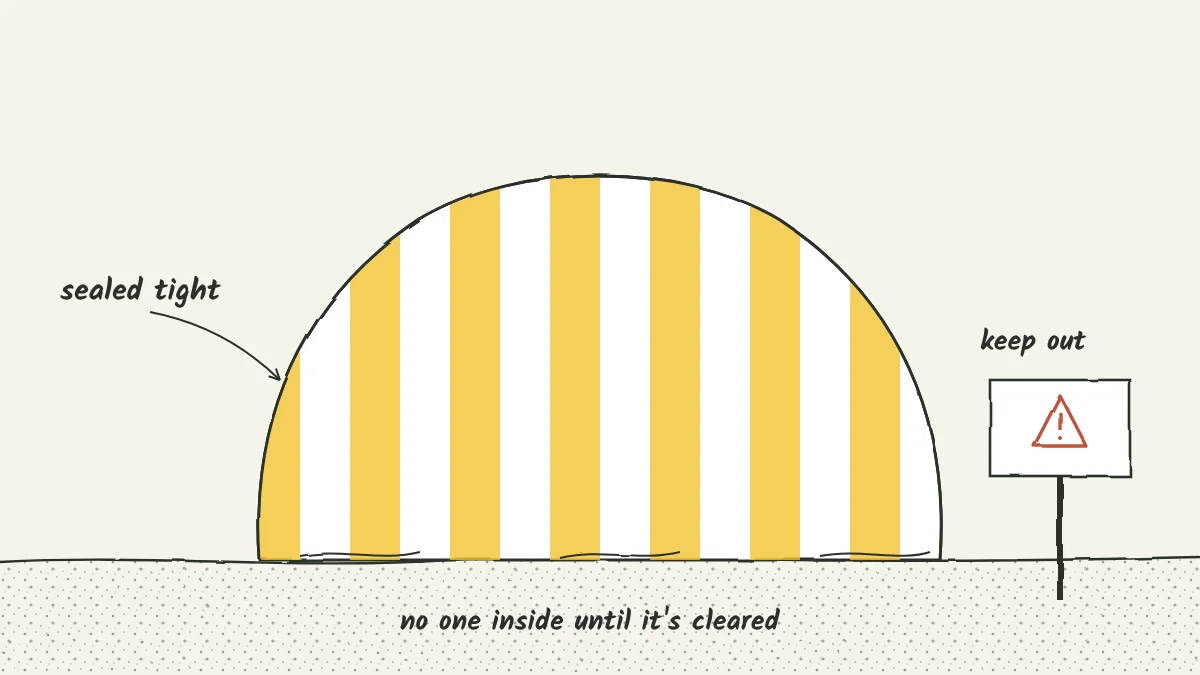
Termite tenting is whole-house fumigation for drywood termites. The house is sealed under tarps and filled with a gas, usually sulfuryl fluoride, that reaches into all the wood and kills every colony inside. Everyone, including pets and plants, leaves. The house is aired out and tested before you return, usually after a few days. Tenting leaves no lasting protection behind.
On this page
When tenting is the right call, and when it isn't
Fumigation exists for one main situation: drywood termites that are widespread or that nobody can reach. UF/IFAS calls it the primary control for inaccessible or widespread drywood infestations, and UC IPM rates it highly effective when it's done correctly. The gas gets into every crack and pore of every board in the house, including the ones behind walls nobody can open.
Tenting is not the answer when:
- The termites are subterranean. Their colonies live in the soil outside the house, and the gas doesn't reach them. Subterranean termites are treated at the soil; see termite treatment options.
- There's one colony an inspector can reach. A local treatment may be enough, without emptying the house. The trade-offs are in drywood termite treatment.
If you're being told to tent, ask the inspector to show you how many colonies they found and why local treatment won't work. A second opinion before a tent is reasonable.
What happens, day by day
Every company and house differs a little, and the fumigant label sets the rules. This is the usual sequence, based on National Pesticide Information Center and UC IPM guidance and Florida's fumigation rule.
| Stage | What happens | What you do |
|---|---|---|
| Before | Inspection, contract and a preparation list | Read the list early; some items take days |
| Prep day | Food and medicines bagged or removed, people, pets and plants out | Leave, with everything you'll need for a few days |
| Tenting | Tarps cover the house and are sealed; warning signs go up; the house is secured | Stay away |
| Fumigation | A warning agent is released, then the fumigant; it stays in for the time the label requires | Nothing; the gas does the work |
| Aeration | Tarps come off, fans push the gas out | Still stay away |
| Clearance | The applicator measures the air in the house | Wait for the all-clear |
| Return | The applicator confirms the house is cleared for reentry | Open windows if you like, and move back in |
How long you're out varies. California's Structural Pest Control Board says anywhere from six hours to a week depending on conditions, and UC IPM describes it as several days.
The gas, in plain terms
The National Pesticide Information Center (NPIC) says sulfuryl fluoride is the main active ingredient in fumigants used on homes. It's a colorless, odorless and highly toxic gas, and EPA classifies the products as restricted use, so only certified applicators may use them. In Florida, fumigation is its own certification category, separate from ordinary termite work.
Because the fumigant has no smell, a warning agent goes in first. NPIC says chloropicrin, a strongly irritating chemical, is commonly used, and Florida's rule requires it with odorless fumigants: anyone who somehow got inside would be driven out by it before the fumigant arrives.
The gas works by filling the space, not by coating it. NPIC says leftover residues aren't expected to remain on surfaces after aeration. That's the good news for your kitchen counters. It's also why tenting gives no residual protection, a point UC IPM makes clearly: once the house is aired out, nothing stops a new swarmer from moving in next spring.
How you know it's safe to go back
This is the part that matters most, and it's not a judgment call. After the tarps come off and fans have run, the applicator measures the fumigant in the air. NPIC says applicators must make sure levels don't exceed the EPA limit of 1 part per million, and occupants may not go back in until those checks are done. UF/IFAS describes the same standard for Florida drywood fumigations: aeration to 1 ppm or less.
Ask the company who will do the clearance test, with what instrument, and how you'll be told the house is cleared. A good company answers without hesitating.
Getting ready, in brief
The preparation list is long enough to have its own page: how to prepare for termite tenting. The essentials, from NPIC:
- Everything alive goes. People, pets, fish, reptiles and houseplants. NPIC notes sulfuryl fluoride can be toxic to all living things, and asks that neighbors keep children and pets away during fumigation and aeration.
- Food and medicine get bagged or removed. Anything not in an intact, airtight plastic, glass or metal package, including what's in the fridge and freezer, goes into the special bags the company provides or leaves the house.
- Open things up. Drawers, cabinets, interior doors and appliances open, so gas can circulate.
- Fire off. Pilot lights and open flames off, heating elements unplugged or switched off.
- Covers off. Waterproof mattress and pillow covers come off so they don't trap gas.
Condos, townhouses and attached homes
Tenting is a building-wide decision. In Florida, an entire multiunit building must be vacated before fumigation, and each unit must be tested for clearance afterward; if that can't be arranged, it can't be fumigated. That's why owners in attached housing usually end up with local or heat treatments in their own unit. The Miami page covers how this plays out in a condo-heavy city: termites in Miami.
Tenting vs whole-house heat
Heat is the main whole-structure alternative to fumigation. Both kill drywood termites throughout the house and neither leaves protection behind. The full picture is in heat treatment for termites.
| Tenting (fumigation) | Whole-house heat | |
|---|---|---|
| How it works | Gas fills every space in the sealed house | Hot air raises the wood to a lethal temperature |
| Time out of the house | Hours to about a week, often a few days | Usually hours |
| Reaches hidden colonies | Yes, throughout the structure | Yes, if the whole structure heats evenly |
| Residue | None expected after aeration (NPIC) | None |
| Watch out for | Bagging food and medicine; plants and pets out | Heat-sensitive belongings; parts of the house that don't heat well |
| Lasting protection | None | None |
Sources: NPIC, UC IPM and the California Structural Pest Control Board. Costs for both are covered in termite tenting cost.
Before you agree to tent
Do
- Ask how many colonies were found, and where
- Ask why a local treatment won't do the job
- Confirm the company and applicator are certified for fumigation in your state
- Ask who does the clearance test and how you'll be told
- Plan prevention for after; tenting leaves nothing behind
Don't
- Tent for subterranean termites
- Go back inside early for anything, even a pet's medicine
- Leave food or medicine in unsealed packaging
- Assume a tented house can't get termites again
Questions people ask
How long do you have to be out of the house for termite tenting?
Usually a few days. California's Structural Pest Control Board says anywhere from six hours to a week depending on conditions, and UC IPM describes it as several days. You return only after the applicator has tested the air and cleared the house.
Is it safe to go back after termite fumigation?
Yes, once the house has been aired out and tested. Applicators must confirm the fumigant is at or below EPA's 1 part per million limit before anyone goes back in, and NPIC says residues aren't expected to remain on surfaces.
Does termite tenting kill subterranean termites?
No. Subterranean colonies live in the soil outside the house, where the gas doesn't reach. Tenting is for drywood termites and some other wood-boring pests that live inside the structure.
Do I have to remove food before termite tenting?
Food, feed, tobacco and medicines not in intact, airtight plastic, glass or metal packaging must be removed or double-bagged in the special bags the company provides. That includes items in the refrigerator and freezer.
Does tenting prevent termites from coming back?
No. Fumigation kills the termites in the house that day but leaves no residual protection. Sealing cracks, screening vents and treating exposed wood help keep new swarmers out afterward.
Keep reading
Termites in your state
Sources
- National Pesticide Information Center: Fumigation
- UF/IFAS EDIS IN236: West Indian drywood termite
- UC IPM: Drywood termites
- California Structural Pest Control Board: Termites
- Florida Administrative Code 5E-14.111: Fumigation requirements
- UF/IFAS EDIS IN1269: Choosing a pest control company in Florida