How to Prepare for Termite Tenting: The Checklist
Most of tenting is out of your hands. The preparation isn't, and it's where the mistakes happen: a forgotten bag of dog food, a pilot light left on, a houseplant in the bathroom. Here's the checklist, laid out by day, with the reason for each item.
The short version
Before tenting, remove all people, pets and plants; remove or double-bag any food, pet food, tobacco and medicine that isn't in an intact airtight glass, metal or plastic container, including what's in the fridge and freezer; open drawers, cabinets and doors; turn off pilot lights and heating elements; and take off mattress protectors. Follow your company's written list, which comes from the fumigant label.
On this page
The one rule behind the whole list
The fumigant is a gas that's meant to go everywhere in the house, into every board, drawer and wall void. The National Pesticide Information Center (NPIC) describes sulfuryl fluoride, the usual fumigant for homes, as toxic to all living things. Almost every item on the checklist follows from that: anything alive has to leave, anything you'll eat or swallow has to be sealed off, and anything that could trap gas or ignite it gets opened or switched off.
Your fumigation company will give you a written preparation list. It comes from the product label, which is the legal rulebook for the job. Follow theirs where it differs from this one.
A week or more before
-
Read the company's preparation list
Ask for it in writing as soon as you book. Note anything you need to arrange, like gas service, and ask about anything that's unclear.
-
Book somewhere to stay, for people and pets
Plan to be out for the whole exposure and aeration period plus clearance testing. Angi's cost guide says the house is uninhabitable for two to three days; California's pest control board says it can range from six hours to a week. Ask your company for their estimate.
-
Arrange the gas shut-off if they ask
Angi notes that homeowners may need to schedule a gas shut-off with the utility company. Ask your fumigator whether they handle it or you do, and who turns it back on.
-
Tell the neighbors
NPIC asks that neighbors keep children and pets away during fumigation and aeration. A note with the dates saves awkward conversations over the fence.
The last two or three days
-
Use up the fridge and freezer
NPIC says food in the refrigerator and freezer must be removed or double-bagged unless it's in intact, airtight plastic, glass or metal packaging. The less you have, the less you bag.
-
Bag or remove food, pet food, tobacco and medicine
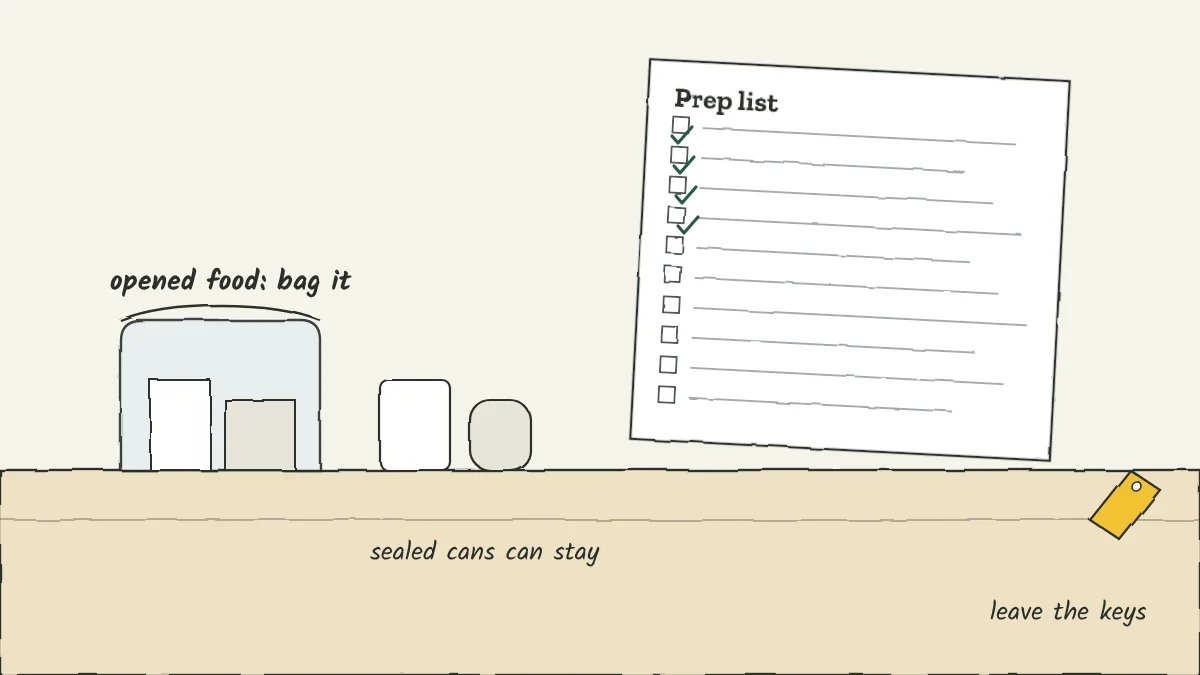
Use the special bags the company provides; NPIC notes applicators usually supply them. Factory-sealed cans and jars can stay. Opened boxes, bags of flour, pet kibble and pill organizers can't, unless they're bagged.
-
Move the plants
All houseplants go, including those on balconies or porches that will be under the tent. Angi suggests watering the lawn and trimming shrubs along the house before the tarps go on; ask your company about plants against the walls.
-
Strip waterproof covers
NPIC says to remove waterproof mattress and pillow covers so they don't hold pockets of gas. Plain sheets can stay.
The morning of the job
-
Open everything
Interior doors, drawers, cabinets, closets and appliances like the fridge, freezer, dishwasher and oven should be open, so the gas can circulate, per NPIC.
-
Fire and heat off
Turn off pilot lights and any open flame, and unplug or switch off heating elements, as NPIC advises.
-
Everything alive out
People, dogs, cats, birds, fish and their tanks, reptiles and plants. NPIC lists all of them. Check closets, the garage and any attached space.
-
Leave access
The certified operator must be able to get into every room. Florida's rule, for example, requires them to personally check all parts of the structure, including locked rooms and closets, before releasing the fumigant. Leave keys for anything locked.
Stays, bags or goes
A quick reference for the kitchen, the bathroom and the garage. When in doubt, bag it or take it with you.
| Item | What to do | Why |
|---|---|---|
| Unopened cans, glass jars, sealed plastic bottles | Can stay | Intact airtight glass, metal or plastic packaging is the NPIC exception |
| Opened food, cereal, bread, spices | Double-bag or remove | Unsealed packaging can take up the gas |
| Refrigerator and freezer contents | Double-bag or remove | NPIC includes them explicitly |
| Pet food and treats | Double-bag or remove | Counts as feed |
| Medicines and vitamins | Remove, or double-bag if sealed | Medicines are named in NPIC's list |
| Tobacco products | Double-bag or remove | Named in NPIC's list |
| Houseplants, fish tanks, reptiles | Remove | Toxic to all living things |
| Mattress and pillow protectors | Remove | Waterproof covers can trap gas |
| Clothing, furniture, dishes, electronics | Can stay | No special handling in NPIC's guidance; follow your company's list |
Source: National Pesticide Information Center guidance on structural fumigation. Your company's list takes priority.
Coming home
You go back only after the applicator has tested the air and cleared the house. NPIC says applicators must confirm the fumigant is at or below EPA's limit of 1 part per million before anyone re-enters. Ask how you'll be told, and don't go back early for anything, not even a forgotten pet medicine.
Once you're cleared:
- Unbag the food and put things back. Factory-sealed items that stayed in the pantry need nothing special.
- Turn the gas and pilot lights back on, or have the utility do it if they turned it off.
- Bring pets and plants home.
- Keep the paperwork: the contract, the treatment notice and anything listing the fumigant used.
Then think about prevention. Tenting leaves nothing behind, so new swarmers can move in next season; the steps are on the drywood termites page. What the whole process involves, and when it's worth doing at all, is in termite tenting.
The mistakes that delay jobs
Do
- Walk every room, closet and the garage with the checklist
- Check balconies and porches that will be under the tarp
- Ask what time the clearance test will happen
- Keep the company's emergency number in your phone
Don't
- Leave opened pet food in a cabinet
- Forget the bathroom orchid or the fish tank
- Leave pilot lights on
- Go back in before you've been told the house is cleared
Questions people ask
What do I need to remove before termite tenting?
All people, pets and plants, plus food, pet food, tobacco and medicine that isn't in an intact, airtight glass, metal or plastic container, unless you double-bag it in the special bags your company provides. That includes items in the refrigerator and freezer.
Do I need to bag canned food for termite fumigation?
Not if the cans, jars or bottles are unopened and airtight. NPIC's guidance exempts intact plastic, glass or metal packaging. Opened containers and boxes need to be bagged or removed.
What happens to my clothes and furniture during tenting?
They can stay. The gas passes through and out during aeration, and NPIC says residues aren't expected to remain on surfaces. Follow your company's list for anything special, such as mattress covers.
Do I need to turn off the gas for termite tenting?
Usually you'll need pilot lights and flames off, and some companies require a gas shut-off by the utility. Ask your fumigator who arranges it and who turns it back on.
How long after tenting can I go back in?
Only after the applicator has measured the air and cleared the house. Angi's cost guide puts the time out at two to three days, though it can be shorter or longer depending on the job.