Termite Tenting Cost
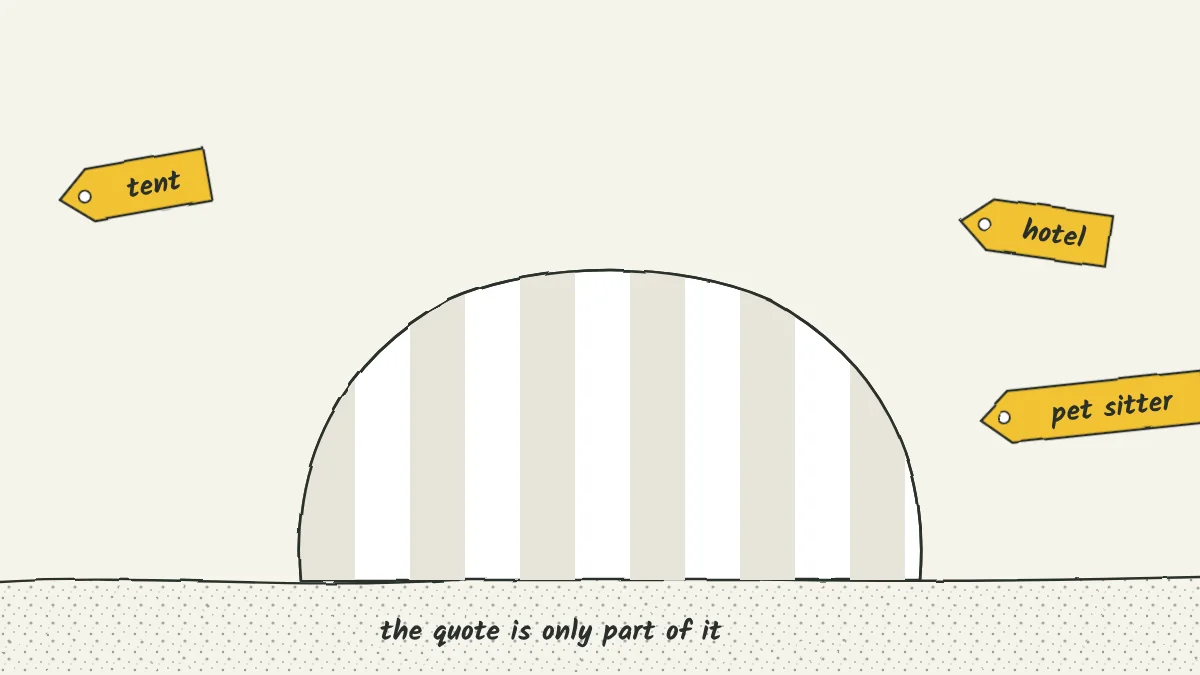
Tenting a house for drywood termites usually costs a few thousand dollars, and the quote is only part of it. Here's what national price guides show, what pushes a quote up or down, the costs that don't appear on it, and when a cheaper treatment would do the same job.
The short version
Termite tenting typically costs $2,000 to $5,000, with a national average around $3,000 and a full range of about $1,500 to $8,000, according to Angi's 2026 cost guide. Fumigators price by the size of the house, often $1 to $4 per square foot. Budget separately for two to three nights away, pet boarding and replacing food.
On this page
What tenting costs, by home size
These ranges come from Angi's cost guide, updated in August 2026. They're national figures; prices in South Florida and Southern California, where drywood termites are common, can differ.
Angi also gives fumigation at $1 to $4 per square foot of interior, or $5 to $20 per linear foot of the home's perimeter. HomeAdvisor puts fumigation for extensive infestations at $1,500 to $8,000.
What pushes the price up or down
Fumigation is priced on the size of the job, not on how many termites you have. A house with one colony and a house with twenty cost the same to tent. What changes the quote:
- Size. More square footage means more tarp, more fumigant and more time. That's why most companies quote by the square foot or the house's footprint.
- Shape and access. Tight spaces between houses, attached structures and complicated rooflines take more work to seal. Florida's rules, for instance, don't allow fumigation if a neighboring occupied building can't be visually checked or its openings sealed.
- Attached buildings. An attached garage or a connected unit is part of the job. In Florida, an entire multiunit building must be vacated and every unit cleared, which makes tenting a townhouse row or small condo building a shared, and shared-cost, decision.
- What's bundled. Some quotes include the preparation bags, the gas shut-off coordination, the clearance test and a warranty. Others don't.
- Where you live. Labor and competition vary by market. Get at least two quotes locally.
The costs that aren't on the quote
Angi's guide notes the house is uninhabitable for two to three days. Here's what that tends to mean for your budget. These are categories, not prices, because they depend entirely on your situation.
| Cost | Why you'll pay it | How to keep it down |
|---|---|---|
| Lodging | Two to three nights away for the household | Family, friends, or a short-term rental near home |
| Pet boarding | Pets, fish and reptiles must leave the house | Book early; swarm season is busy for kennels too |
| Food | Opened food must be bagged or thrown out | Run down the fridge and pantry the week before |
| Gas reconnection | Some jobs need a utility gas shut-off | Ask who schedules it and whether there's a fee |
| Plants | Houseplants must leave; plants against the walls may be affected | Move pots out; ask about shrubs along the house |
| Prevention afterward | Tenting leaves no lasting protection | Ask for the price of preventive treatment in the same quote |
The full preparation list is in how to prepare for termite tenting.
Tenting vs the alternatives
The cheapest tenting job is the one you didn't need. Before you compare fumigation quotes, compare approaches.
- Whole-house heat treats the whole structure too, usually with hours rather than days out of the house. Angi lists heat at about $1 to $3 per square foot, slightly less on average than fumigation. It suits some houses better than others; see heat treatment for termites.
- Local treatment of one or two known colonies costs a fraction of either. Our cost guide puts spot treatments in the low hundreds of dollars. The catch is that it only works if every colony has been found and reached.
How to decide between them is covered in drywood termite treatment. If an inspector recommends tenting, ask how many colonies they found and why a local treatment won't do. If they can't say, get another inspection before you spend thousands.
Reading a tenting quote
Line two quotes up against these questions. Missing answers are information too.
| Question | Why it matters |
|---|---|
| What termite is this for? | Tenting is for drywood termites; it does nothing to subterranean colonies in the soil |
| Is the whole structure covered, including the attached garage? | The warranty should match what was fumigated |
| What's the warranty term, and what happens if pellets reappear? | Retreatment terms vary widely between companies |
| Is the clearance test included, and who performs it? | You go home only after the air tests below EPA's limit |
| Who arranges the gas shut-off and reconnection? | Avoids a surprise utility bill and a cold shower |
| Are preparation bags supplied? | Most companies provide them; confirm |
| What does preventive treatment afterward cost? | Tenting leaves nothing behind |
In Florida, the contract must say on its first page, in bold, whether it covers repair, retreatment or neither, and whether it covers drywood termites, subterranean termites or both.
Before you pay for a tent
Do
- Get two or three fumigation quotes on the same house
- Get at least one opinion on whether local treatment would work
- Budget for lodging, pets and food on top of the quote
- Ask what the warranty covers and for how long
- Confirm the company holds a fumigation license in your state
Don't
- Choose on the lowest number without reading what it includes
- Tent for subterranean termites
- Assume tenting keeps termites away for good
- Book the hotel before you have a confirmed date and clearance plan
Questions people ask
How much does it cost to tent a house for termites?
Typically $2,000 to $5,000, with a national average around $3,000 and a full range of roughly $1,500 to $8,000, according to Angi's 2026 cost guide. Larger houses cost more, since fumigation is priced by size.
How much is termite tenting per square foot?
Angi puts fumigation at about $1 to $4 per square foot of interior space, or $5 to $20 per linear foot of the home's perimeter. A 2,000-square-foot house typically lands between $2,000 and $8,000.
Is heat treatment cheaper than tenting?
Slightly, on average. Angi lists heat at about $1 to $3 per square foot, compared with $1 to $4 for fumigation. Heat also means hours rather than days out of the house, but it isn't a fit for every structure.
Does homeowners insurance pay for termite tenting?
Usually not. Mississippi State University Extension notes that home insurance doesn't cover termite damage, and treatment is generally treated as maintenance. Check your own policy. More in does insurance cover termite damage.
Is termite tenting worth the cost?
When drywood termites are widespread or hidden, yes, because it reaches every board in the house. When there's one known, reachable colony, a local treatment costing a fraction as much may do the same job.
Keep reading
Termites in your state
Sources
- Angi: Termite tenting cost (updated August 2026)
- HomeAdvisor: Termite inspection cost and related costs (updated June 2026)
- Florida Administrative Code 5E-14.111: Fumigation requirements
- Florida Statute 482.227: Wood-destroying organism contracts
- Florida Administrative Code 5E-14.105: Contracts for wood-destroying organism treatment
- Mississippi State University Extension: Termite conducive conditions
- National Pesticide Information Center: Fumigation