Termite Damage vs Water Damage: How to Tell
Termites, rot and leaks leave damage that looks a lot alike from across the room, and they often show up together, because water invites all three. Up close, each leaves its own fingerprints. Here's how to read them before you call anyone.
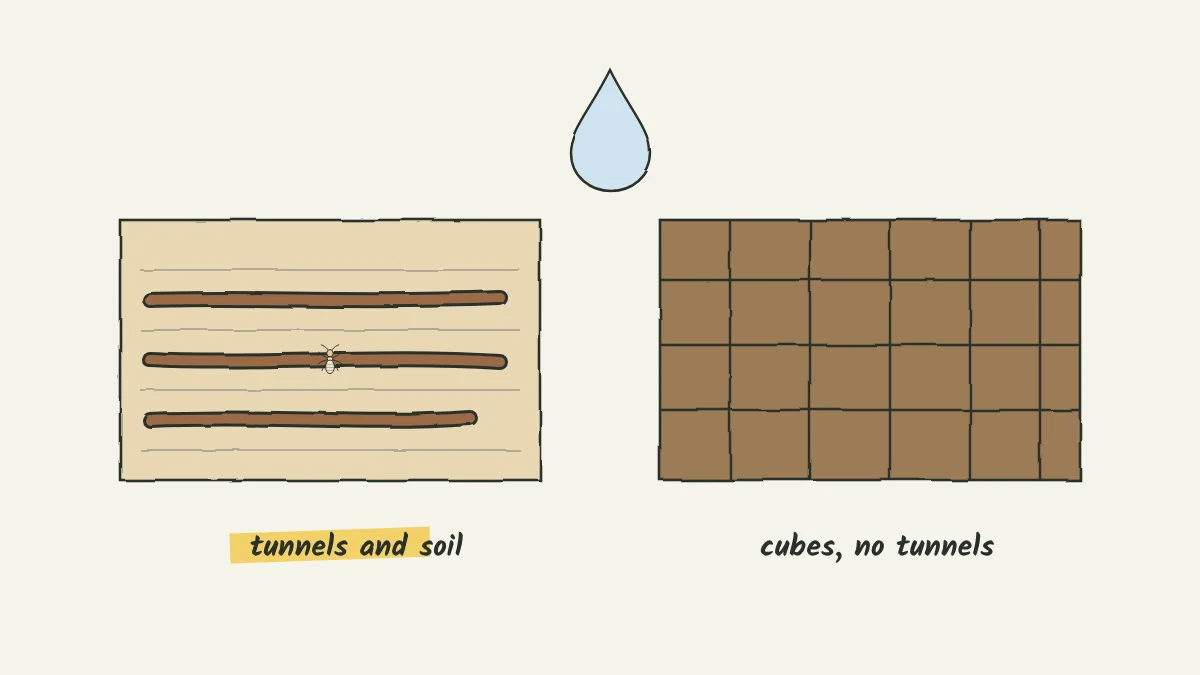
The short version
Termite damage has tunnels: subterranean termites hollow wood along the grain and leave dried soil inside, and drywood termites leave pellets. Wood rot has no tunnels; brown rot cracks into dark cubes and crumbles, white rot turns pale and stringy. Plain water damage stains and swells wood without hollowing it. Often the leak came first.
On this page
Why they're so easy to confuse
Texas A&M AgriLife puts it plainly: deterioration caused by wood-destroying fungi can be confused with termite damage. Both soften wood, both show up in the same places, and both can hide behind a surface that looks fine.
The reason they overlap is moisture. Texas A&M notes that moisture can cause wood decay and also encourage subterranean termites. Washington State University adds that dampwood termites and moisture ants attack damp or rotting wood and speed up decay. So the question is often not "termites or water?" but "is it water alone, or water plus something that's eating the wood?"
The fingerprints, side by side
Open the damaged wood, or pry off a piece, and look at the inside. These are the clues extension sources point to.
| Clue | Subterranean termites | Drywood termites | Wood rot (fungus) | Water damage only |
|---|---|---|---|---|
| Inside the wood | Tunnels along the grain, packed with dried soil | Clean tunnels and chambers | No tunnels; wood breaks down | No tunnels |
| Texture | Layers left, soft parts eaten | Thin shell over hollow galleries | Brown rot: dark, crumbly cubes. White rot: pale, spongy or stringy | Swollen, stained, may be soft when wet |
| What's nearby | Mud tubes, wings, soil in cracks | Hard, six-sided pellets | Fungus growth, musty smell, a leak | Stains, warping, peeling paint, a leak |
| Surface | Can look intact | Blistering paint or thin wood | Cracked, shrunken or sunken | Water lines, bubbling finish |
| Dry wood? | Doesn't stop them if they have moisture from the soil | Live in dry wood by design | Decay stops below about 20% moisture | Drying it fast keeps rot from starting |
Sources: Texas A&M AgriLife E-368, University of Kentucky EF604, Washington State University Pestsense, UF/IFAS, USDA Forest Products Laboratory. Not sure which termite? See signs of termites.
What termite damage looks like
Subterranean termites eat the soft springwood and leave the harder layers, so the wood looks layered. Texas A&M says their damage is usually confined to that soft spring growth, with tunnels that run with the grain and may be lined with mud. The University of Kentucky points to that soil as the giveaway: rot and carpenter ant galleries don't have it. Look nearby for mud tubes on the foundation.
Drywood termites don't bring soil. They cut clean chambers in the wood and push their droppings out as hard, six-sided pellets that pile up below. Paint that bubbles or a skin of wood that flakes away can mean the galleries reach right to the surface, a sign UF/IFAS lists for drywood termites. If you find pellets, the drywood termites guide is next.
For telling them apart
As an Amazon Associate I earn from qualifying purchases.
-
View on Amazon
Awl or flat-head screwdriver
Press it into suspect wood. Healthy wood fights back. Eaten wood gives way like a stale cracker.
-
View on Amazon
Pin-type wood moisture meter
Wood that reads above about 20% is wet enough to invite rot and termites. Great for sills and subfloors.
-
View on Amazon
Bright LED flashlight, 1,000+ lumens
The one tool that really matters. A tight, bright beam shows mud tube texture and wing piles in dark corners.
What rot looks like
Wood rot is fungus, and it needs water to grow. Washington State University describes three kinds you'll see in houses:
- Brown rot, the most common on softwood framing like fir and pine. Advanced decay is dark brown, dry and crumbly, and cracks across the grain into a cube-like pattern. It's often called "dry rot," which is misleading. WSU is direct that moisture is required for decay; the wood just looks dry once the damage is done.
- White rot, mainly in hardwoods. The wood turns bleached, whitish, spongy or stringy, and it can lose strength before you see much.
- Soft rot, which works in from the surface where wood is frequently wet. It's slower, and it can be hard to tell from brown rot.
What rot doesn't have is tunnels, pellets or packed soil. If the wood is breaking down evenly instead of being hollowed out, think fungus first.
How wet is too wet?
Wood science gives clear numbers here. Research from the USDA Forest Products Laboratory and a Canadian partner says wood decays above about 30 percent moisture content, the point where the cell walls are saturated, and treats 20 percent as a safety margin. Below about 20 percent, existing decay stops; between 20 and 30 is a gray zone. In their lab work, brown rot moved quickly at 32 percent, started slowly at 29, and didn't start at 26 over four weeks.
That's why a cheap pin-type moisture meter is so useful. A sill or subfloor reading in the 20s or higher is wet enough to look for the source, whatever else is going on. More on meters and other gadgets in termite detection tools.
The screwdriver test, done properly
-
Tap first
Texas A&M suggests striking suspect wood with a screwdriver handle or hammer. A dull, thudding sound means the wood may be damaged inside.
-
Probe the soft spot
Push a screwdriver or ice pick into the wood. Sound wood resists. Damaged wood gives way.
-
Look at what comes out
Soil or mud on the tip points to subterranean termites. Pellets point to drywood termites. Brown, crumbly cubes or pale strings point to rot. Wet, intact fibers point to water alone.
-
Check the moisture
If you have a meter, take a reading in the damaged spot and in sound wood nearby. A big difference tells you where the water is going.
-
Find the water source
Leaks, condensation, bad gutters and soil against the wall feed rot and termites alike. Kentucky and Texas A&M both put fixing moisture problems on their termite prevention lists.
Why it matters who did it
The fix depends on the cause. Termite damage calls for treating the colony and then repairing the wood. Rot calls for stopping the water and replacing what's decayed; a termite treatment does nothing for fungus. Water damage that's caught early may only need drying out.
It also matters on paperwork. In California, the state's termite reports cover wood-destroying organisms, including decay fungi, so rot from a leak is written up alongside termite damage. Florida's state form covers wood-decay fungi too, while the national NPMA-33 form leaves fungus out unless an optional attachment is added. See Section 1 vs Section 2 termite report and WDI inspection.
The cause also shapes any insurance question; see does insurance cover termite damage.
Before you call anyone
Do
- Open a damaged spot and look at the inside of the wood
- Look for soil, pellets or fungus, not just softness
- Measure moisture in damaged and sound wood
- Fix the leak or drainage problem whatever the cause turns out to be
Don't
- Pay for termite treatment on wood that's rotting from a leak
- Assume "dry rot" means the wood was never wet
- Patch over soft wood without finding the water
- Assume old damage means termites are still there
Questions people ask
How can you tell termite damage from water damage?
Look inside the wood. Termite damage has tunnels: subterranean termites leave soil-packed galleries along the grain, and drywood termites leave clean chambers and hard pellets. Water damage stains, swells and softens wood without tunnels, and rot breaks it down into cubes or strings.
Is it dry rot or termites?
Dry rot is brown rot fungus. It cracks wood into dark, crumbly cubes and has no tunnels, soil or pellets. Termite damage has tunnels. Despite the name, dry rot needs moisture to start.
Can termite damage look like water damage?
Yes. Both can cause soft spots, blistered paint and sagging floors, and termites are often found near leaks because moisture attracts subterranean termites. Probing the wood and looking for soil, pellets or mud tubes nearby tells them apart.
Does wet wood attract termites?
Moisture encourages subterranean termites and also causes decay, according to Texas A&M AgriLife, and dampwood termites live in wet or decaying wood. Fixing leaks and drainage is one of the most effective ways to make a house less attractive to termites.
Keep reading
Termites in your state
Sources
- Texas A&M AgriLife Extension: Subterranean termites (E-368)
- Washington State University Pestsense: Wood-rotting fungi
- Morris and Winandy, USDA Forest Products Laboratory: Limiting conditions for decay in wood systems (2002)
- University of Kentucky Entomology: Termite control tips for homeowners (EF604)
- UF/IFAS EDIS IN236: West Indian drywood termite
- California Code of Regulations, Title 16, section 1990: Report requirements