Who Pays for the Termite Inspection, Buyer or Seller?
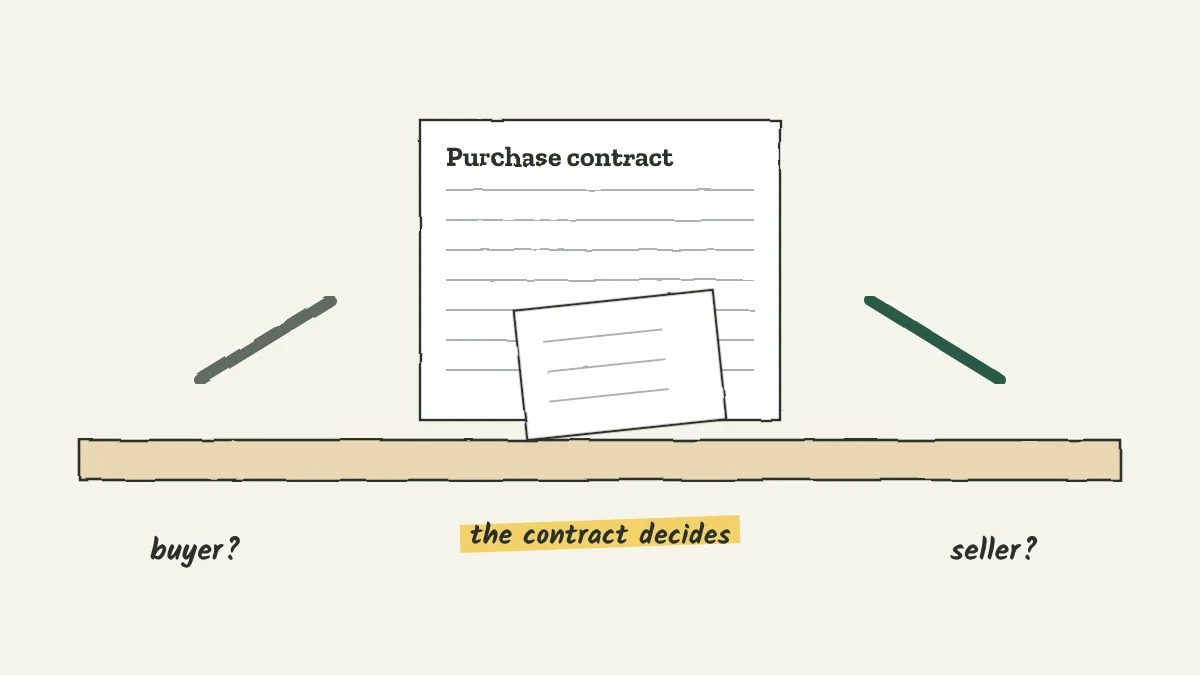
Ask five agents in five states who pays for the termite inspection and you may get five answers. That's because no law settles it nationally. The purchase contract does, shaped by local custom and the rules of the buyer's loan. Here's how to figure out the answer for your sale, and the separate, bigger question of who pays if termites are found.
The short version
Usually the buyer, but it's negotiable. The purchase contract decides, and local custom shapes what the contract says. VA rules have let veteran borrowers pay for a required inspection since June 2022. Who pays for treatment or repairs if termites are found is a separate question, and in many standard contracts it's also left to negotiation.
On this page
The contract decides
Who pays for the inspection is a term of the purchase contract, like the closing date. Standard forms published by state Realtor associations or real estate commissions set a default, and buyers and sellers can change it. Where a form says nothing, the parties fill the gap.
That's why the same question gets different answers:
- In California, the standard purchase agreement used to put pest control in the contract, and sellers generally provided the inspection and paid for corrective work. In 2014, the California Association of Realtors removed that language. A Santa Barbara Independent real estate column describes the result: the buyer may pay for a pest report, and who pays for the work is negotiated.
- In South Carolina, a Charleston-area brokerage says the buyer typically orders and pays for the CL-100, though it's negotiable and the contract usually says who pays and who picks the inspector.
- In North Carolina, the standard offer form treats pest inspections as part of the buyer's due diligence, during which the buyer can investigate the property and walk away for any reason.
When the loan has a say
The buyer's loan can shape the answer, and the biggest change came with VA loans. For years, VA limited the fees a veteran could be charged, and in most states the termite inspection was one the veteran couldn't pay. VA Circular 26-22-11, effective June 15, 2022, changed that: whenever the appraisal's Notice of Value calls for an inspection, the veteran is now allowed to cover that fee, along with needed repairs the report turns up.
FHA and USDA don't assign the cost. FHA requires a report only in certain situations, and USDA only when the lender, the appraiser or state law calls for one. The rules for each loan are in FHA and VA termite inspection requirements.
Who usually pays, and what decides it
General patterns, not rules. Your contract controls.
| Situation | Who usually pays | What decides it |
|---|---|---|
| Buyer's own inspection during the contract period | Buyer | The buyer chose it |
| Report the lender requires | Negotiated, often the buyer | Contract terms and local custom |
| Seller's pre-listing inspection | Seller | The seller ordered it |
| VA loan with a required report | Buyer or seller, since 2022 | Negotiated; VA allows either |
| Reinspection after treatment | Often whoever pays for treatment | Contract terms |
Inspection prices are in termite inspection cost.
The bigger question: who pays if termites are found
The inspection usually costs a few hundred dollars or less. Treatment and repairs can cost thousands, and standard contracts often handle them separately:
- Texas. The 2011 version of the Texas Real Estate Commission's standard resale contract said that, unless agreed otherwise in writing, neither party is obligated to pay for lender-required repairs, which it defined to include treatment for wood-destroying insects. The current form is TREC 20-18, adopted effective 2025; check its terms with your agent.
- California. Since 2014, who pays for Section 1 and Section 2 work is a negotiation, not a default. See Section 1 vs Section 2.
- South Carolina. Some contracts make the seller responsible for a clean CL-100 and any repairs. In a 2005 case, Dixon v. Ford, the state Court of Appeals let buyers bring a fraud claim to a jury after a seller who had contracted to provide a clear report and fix damage delivered one apparently altered to say repairs had been made, even though the sale was "as is."
Whatever your state, write the answer into the contract: who pays for the inspection, who pays for any treatment, whether there's a cap on repairs, and what happens if the cost exceeds it. A treatment for a sale may also come with a termite contract you'll want transferred; see transfer a termite bond when selling.
Settling who pays
Do
- Write who pays for the inspection into the contract
- Agree separately on who pays for treatment and repairs
- Set a repair cap and what happens above it
- Ask the lender which report it needs and how recent
Don't
- Assume your last state's custom applies here
- Assume a veteran buyer can't pay; that changed in 2022
- Treat "as is" as erasing a contract promise about the termite report
- Leave treatment costs to a handshake
Questions people ask
Who pays for the termite inspection, buyer or seller?
It's negotiable and depends on the purchase contract and local custom. In many places the buyer pays for the inspection, while who pays for any treatment or repairs is negotiated separately.
Is a veteran allowed to cover the termite report on a VA purchase?
Yes. A 2022 VA circular removed the old state-by-state restriction, so the veteran, the seller or both can split it however the contract says.
Who pays for termite treatment if termites are found before closing?
Whoever the contract says. Some standard forms leave lender-required treatment unassigned unless the parties agree in writing, so negotiate it and put it in writing before closing.
Does the seller have to provide a termite letter?
Only if the contract or local practice requires it. In South Carolina, for example, buyers typically order the CL-100, but contracts sometimes make the seller responsible for a clean report.
Keep reading
Termites in your state
Sources
- Santa Barbara Independent: Should buyers get a pest report? (2021)
- Doss: What is a termite letter (CL-100) in South Carolina real estate
- North Carolina Real Estate Commission: Due diligence questions and answers (2014)
- TENA Companies: VA updates wood destroying pest inspection fees and repair cost policies (Circular 26-22-11, 2022)
- HUD: HOC reference guide, wood destroying insect inspections
- USDA Rural Development: Single family housing existing dwelling requirements
- Texas Real Estate Commission: One to four family residential contract (resale), TREC 20-10 (2011), via Justia
- Texas Administrative Code 22 TAC 537.28: Standard contract form TREC 20-18
- South Carolina Lawyers Weekly: Court says jury to decide if buyers could rely on termite report (2005)