What Is a Termite Letter?
"We just need the termite letter" is one of the most common lines in a home closing, and one of the least precise. There's no single document by that name. Depending on your state, it's a federal form, a state form, or a report the state specifically says is not a "letter." Here's what it really is and what it can and can't tell you.
The short version
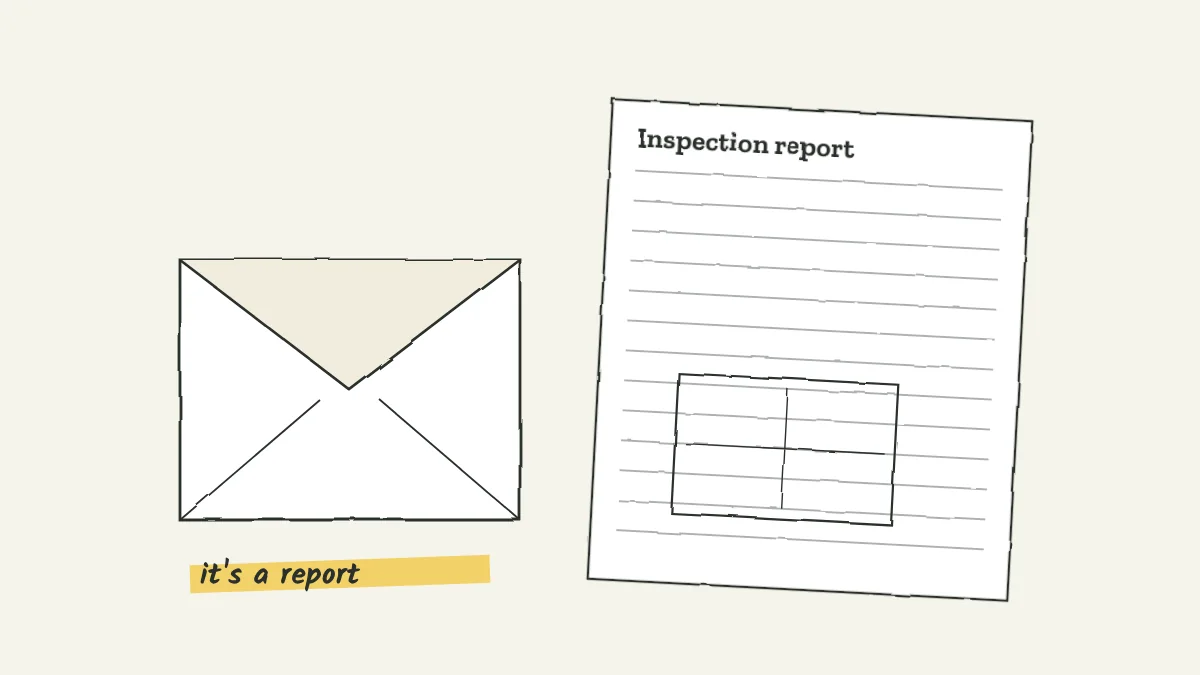
A termite letter is the informal name for the wood-destroying insect report used in a home sale. It's usually the national NPMA-33 or a state form, done by a licensed inspector, and it reports visible evidence of termites and other wood-destroying insects. It isn't a warranty, and lenders often want it recent, within 90 days for FHA.
On this page
Where the name comes from
"Termite letter" is closing-table shorthand, not an official title. What the lender or contract actually calls for is a wood-destroying insect report on a set form. Most of the country uses the NPMA-33, which HUD says replaced the older NPCA-1 form in 2005, and several states require their own forms instead.
The informal names still float around: termite letter, clearance letter, termite clearance, WDI report, CL-100. They usually mean the same thing in a closing. North Carolina is the notable exception in tone. Its agriculture department says its Wood-Destroying Insect Information Report is not a "termite letter" or a clearance letter, because it covers more than termites and doesn't necessarily clear a house.
What the "termite letter" is called, state by state
The official name matters when you're reading a contract or a lender's conditions. These are the states we've covered so far.
| State | Official report | Something worth knowing |
|---|---|---|
| Most states | NPMA-33 | The national form; see WDI inspection |
| South Carolina | Official South Carolina Wood Infestation Report (CL-100) | Locals call the CL-100 the termite letter |
| North Carolina | Wood-Destroying Insect Information Report (WDIR 100) | The state says it isn't a termite letter or a clearance |
| Tennessee | Wood Destroying Insect Infestation Inspection Report | Called a clearance letter; warranted for 90 days |
| Georgia | Official Georgia Wood Infestation Inspection Report | Free treatment of a covered infestation found within 90 days |
| Arizona | Wood-Destroying Insect Inspection Report (WDIIR) | No state law requires one for a sale; lenders do |
| Nevada | Nevada Wood Destroying Pests Inspection Report | The state bars other forms; report due within 5 days |
| Hawaii | Termite Inspection Report (PC-9) | Considered reliable for no more than 15 days |
Florida, Texas, California, Louisiana, Alabama and Mississippi also have their own forms. Each is covered on that state's termite page.
How long a termite letter lasts
A termite letter describes one day. How long it's accepted depends on who's asking:
- FHA accepts a clean report for 90 days, counted from the day of the inspection.
- Lenders set their own windows; in South Carolina, for example, a local brokerage says most lenders want the CL-100 within 30 days of closing.
- Some states set their own clock. Hawaii's PC-9 says its findings are reliable for no more than 15 days, while Tennessee's and Georgia's reports carry 90-day protections.
If closing slips, ask the lender whether the report needs updating before the deadline passes. Loan rules are in FHA and VA termite inspection requirements.
What "clear" means, and doesn't
A "clear" termite letter means the inspector found no visible evidence of active infestation in the areas they could reach on that day. It doesn't mean the house has never had termites, won't get them next year, or has no hidden damage. State forms say so plainly: Hawaii's PC-9 says it's not a guarantee termites are absent; Arizona's rule requires every uninspected area to be listed with the reason.
A letter that isn't clear isn't a deal-breaker either. North Carolina's agriculture department says a clean report isn't required for a sale to close, and that most homes there older than 10 to 15 years show some evidence of wood-destroying insects. What matters is whether there's active infestation, whether it's been treated, and what damage there is. How to read each finding is in termite inspection when buying a house.
Getting a useful termite letter
-
Order it early
Book it at the start of your contract or due-diligence period, not the week before closing.
-
Use the right form
Ask the inspector which form your state and lender require. In Nevada, for example, only the state's own form is allowed.
-
Clear the access
Move boxes from garage walls and open the crawlspace hatch. Blocked areas become "inaccessible" lines.
-
Read past the first page
The conducive conditions and inaccessible areas are often more useful than the headline finding.
-
Keep the treatment paperwork with it
If the house is treated for the sale, the contract and any warranty belong with the letter.
Termite letters
Do
- Ask for the official form by name
- Check how old the lender will accept
- Read the inaccessible areas and conducive conditions
- Keep the letter with your closing documents
Don't
- Expect a one-line "no termites" statement
- Treat a clear letter as a warranty
- Let the report expire before closing
- Assume a letter that isn't clear kills the deal
Questions people ask
What is a termite letter?
It's the common name for the wood-destroying insect report used in a home sale. Depending on your state, it's the national NPMA-33 or a state form, such as South Carolina's CL-100 or North Carolina's WDIR 100.
How long is a termite letter good for?
It depends on who's asking. FHA accepts a clean report for 90 days from the inspection date, many lenders set shorter windows, and Hawaii's form says its findings are reliable for no more than 15 days.
Does a clear termite letter mean there are no termites?
No. It means no visible evidence of active infestation was found in accessible areas on the inspection day. State forms say plainly that the report isn't a guarantee.
Who pays for the termite letter?
It's negotiable in most places and depends on your contract and loan. Since 2022, VA rules let a veteran buyer pay for it when the appraisal requires one.
Keep reading
Termites in your state
Sources
- NCDA&CS: Homeowner's guide to the wood destroying insect report
- HUD: HOC reference guide, wood destroying insect inspections
- Tennessee Department of Agriculture: Pesticide consumer tips
- Georgia Rules 620-6-.03: Official Georgia Wood Infestation Inspection Report
- Arizona Department of Agriculture: Wood-destroying insect inspection reports
- Arizona Administrative Code R3-8-307: Performing a wood-destroying insect inspection; WDIIRs
- Nevada Regulation R005-25: Amendments to NAC 555.430 (2025)
- Hawaii Pest Control Board: Termite Inspection Report form PC-9
- Doss: What is a termite letter (CL-100) in South Carolina real estate
- TENA Companies: VA updates wood destroying pest inspection fees and repair cost policies (2022)