FHA and VA Termite Inspection Requirements
Government-backed loans don't treat termites the same way. VA requires a termite report in most of the country, FHA asks for one only in certain situations, and USDA mostly leaves it to the lender. Here's what each program asks for, and what has to happen before closing when the report finds something.
The short version
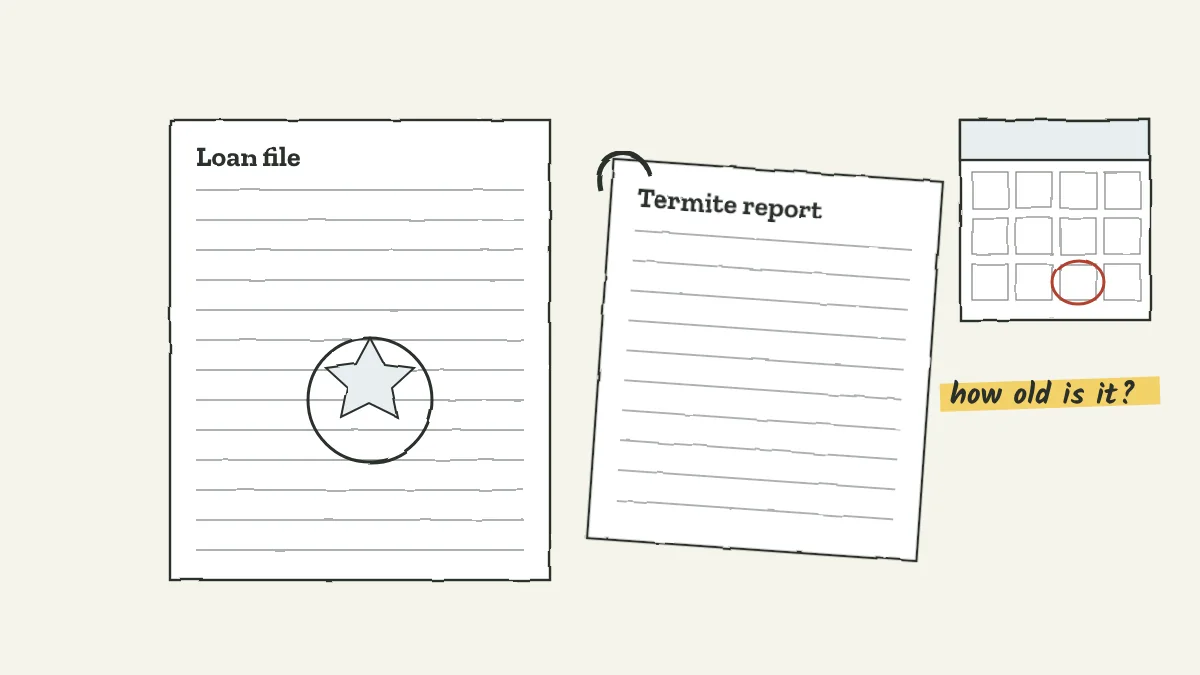
VA requires a wood-destroying insect report statewide in about 30 states plus DC, in certain counties of eight more, and elsewhere only when the appraiser sees a problem. FHA requires one on an existing house only when there's evidence of infestation or damage, a state or local rule, local custom or a lender request. USDA leaves it to the lender, the appraiser or state law.
On this page
VA: required in most of the country
VA's termite rules live in Chapter 12 of the VA Lender's Handbook, and they work by geography. VA last revised the section on wood-destroying insects in July 2025 to clarify which counties are covered in states where only some counties require a report.
Veterans United, a VA lender, sorts the states into three groups:
- Required statewide in Alabama, Arizona, Arkansas, California, Connecticut, Delaware, Florida, Georgia, Hawaii, Illinois, Indiana, Kansas, Kentucky, Louisiana, Maryland, Massachusetts, Mississippi, Missouri, New Jersey, New Mexico, North Carolina, Ohio, Oklahoma, Rhode Island, South Carolina, Tennessee, Texas, Virginia, West Virginia and Washington, D.C.
- Required in certain counties of Colorado, Iowa, Nebraska, Nevada, New York, Pennsylvania, Utah and Wisconsin.
- Required only if the appraiser notes a problem in Alaska, Idaho, Maine, Michigan, Minnesota, Montana, New Hampshire, North Dakota, Oregon, South Dakota, Vermont, Washington and Wyoming.
The requirement shows up on the appraisal's Notice of Value. Under Veterans United's 2026 summary, habitable detached structures that are given value in the appraisal have to be inspected too, so a finished backyard cottage counts.
Who pays on a VA loan now
For years, VA limited the fees a veteran could be charged, and the termite inspection was on the restricted list in most states. VA Circular 26-22-11, effective June 15, 2022, changed that. A borrower may now pay for the wood-destroying pest inspection whenever the Notice of Value requires it, and may pay for necessary repairs the report identifies. Lenders need an itemized invoice naming the borrower and the property to support the charge at closing.
Being allowed to pay isn't the same as having to. Who covers the inspection and any treatment is still a negotiation with the seller, so put it in the contract.
FHA: required only in certain situations
FHA starts from the other end. For an existing house, HUD's reference guide says a wood-destroying insect inspection is required when:
- there's evidence of active infestation, decay or suspicious damage,
- state or local law requires one,
- it's customary in the area, or
- the lender wants one.
Appraisers are told to note any evidence of wood-boring insects in the house or any other structure inside the property lines, and that note is what usually triggers the inspection. When a report is needed, FHA wants it to show that every improvement within the property lines is free of active infestation. A clean report counts for 90 days from the first inspection date.
FHA accepts the national NPMA-33 form, except in the 14 states HUD's guide names as requiring their own; the list is on our WDI inspection page. For condos, the inspection covers the unit, its garage and other structures that are part of it; if the common areas have problems, the lender needs a homeowners association letter with the repair date, the contractor and confirmation that the money is there.
The loan programs side by side
A quick comparison from HUD, VA and USDA guidance. Your lender may add its own conditions.
| VA | FHA, existing house | USDA | |
|---|---|---|---|
| When required | By state and county; elsewhere if the appraiser notes a problem | Evidence of infestation or damage, state or local rule, local custom or lender request | Only if the lender, the appraiser or state law requires it |
| Form | NPMA-33 or the state's form | NPMA-33 or the state's form | Not set by USDA |
| Who can pay | Borrower or seller, since June 2022 | Negotiable | Negotiable |
| What clears it | A report with no active infestation, or proof of treatment and repairs | No active infestation in any structure inside the property lines | Whatever the lender requires |
New FHA construction has its own paperwork, a builder's certification and a treatment record; see termite pretreatment. Conventional lenders set their own rules.
When the report finds termites
The rules are about active infestation. A report showing old, treated damage is a different situation from one showing live termites.
- Active termites. Expect the lender to require treatment and a new or updated report before closing. Under FHA, a bait system counts only when it's used together with a liquid treatment.
- Damage. The appraiser decides whether damage affects the property's safety or soundness, and repairs may be required. Get a contractor's opinion on anything structural; see should you buy a house with termite damage.
- Sectioned reports. In states like California, where reports split findings into Section 1 and Section 2, HUD's guide says Section 1 covers active infestation and its damage, and Section 2 covers conditions likely to lead to infestation without visible evidence. See Section 1 vs Section 2.
Termite reports and government loans
Do
- Ask your lender whether your county requires a VA termite report
- Put who pays for the inspection and treatment in the purchase contract
- Order the inspection early in your contract period
- Keep the treatment record and any transferable warranty
Don't
- Assume a veteran can't pay for the report; that changed in 2022
- Let a report age past your lender's limit
- Close with an active infestation the lender hasn't cleared
- Treat a clean report as a warranty against termites
Questions people ask
Does a VA loan require a termite inspection?
In much of the country, yes. VA requires a wood-destroying insect report statewide in about 30 states and Washington, D.C., in certain counties of eight more, and elsewhere only if the appraiser notes a problem.
Can the buyer pay for a termite inspection on a VA loan?
Yes, since June 15, 2022. VA Circular 26-22-11 lets borrowers pay for the inspection whenever the Notice of Value requires it, and for necessary repairs the report identifies.
Does FHA require a termite inspection?
Not always. For an existing house, FHA requires one when there's evidence of infestation, decay or suspicious damage, when state or local law requires it, when it's customary in the area, or when the lender asks.
How long is a termite report good for on an FHA loan?
HUD treats a clean report as valid for 90 days from the initial inspection date.
Does a USDA loan require a termite inspection?
Only if the lender, the appraiser or state law requires one, according to USDA Rural Development's guidance for existing homes.
Keep reading
Termites in your state
Sources
- HUD: HOC reference guide, wood destroying insect inspections
- Veterans United: VA termite and pest inspections (updated 2026)
- TENA Companies: VA updates wood destroying pest inspection fees and repair cost policies (Circular 26-22-11, 2022)
- TENA Companies: VA revises Topic 33 of Chapter 12 of the Lender's Handbook (2025)
- USDA Rural Development: Single family housing existing dwelling requirements