NPMA-33: How to Read the Wood Destroying Insect Report
The NPMA-33 is the form behind most "termite letters" in the country. It's only two pages, but each box follows rules written by the National Pest Management Association, and knowing them tells you exactly how much a checked box does and doesn't promise. Here's the form, line by line.
The short version
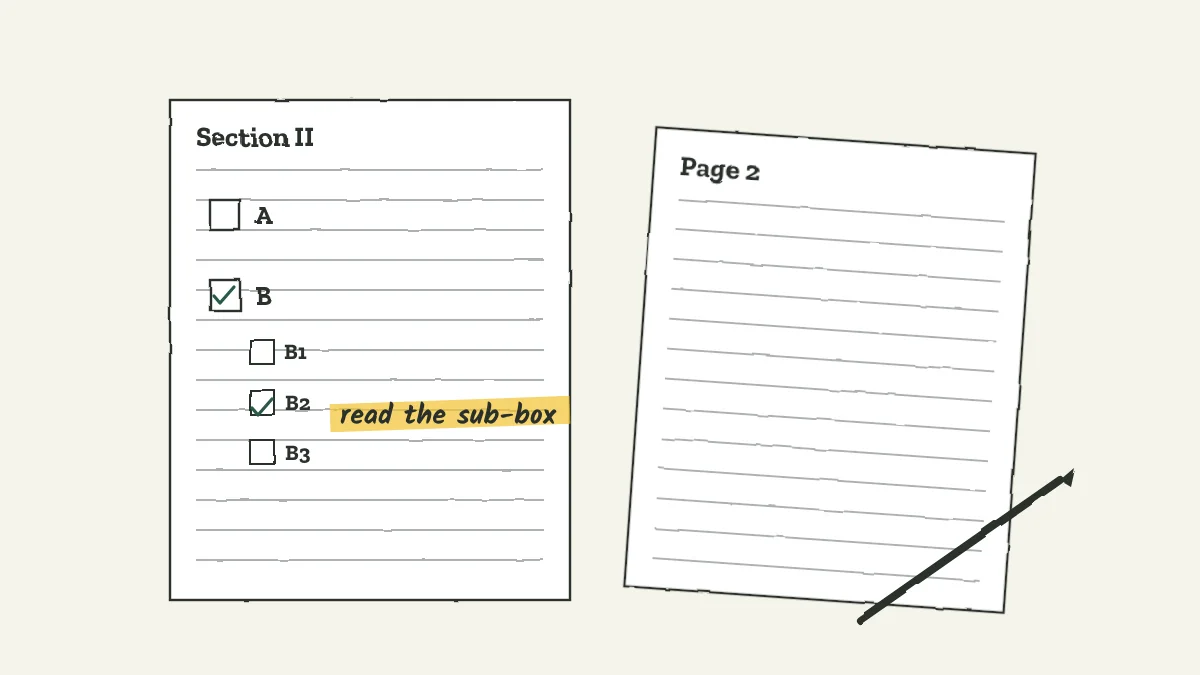
The NPMA-33 is the national wood-destroying insect report. Box A means no visible evidence at all, past or present. Box B means some visible evidence, with B1 for live insects, B2 for signs like tubes or frass, and B3 for visible damage. Section III says whether treatment is recommended, Section IV lists what couldn't be inspected, and page two says the report is invalid for a loan after 90 days.
On this page
Where the form comes from
The NPMA-33 is published by the National Pest Management Association. It replaced the older NPCA-1 form, which the 2004 edition says became obsolete after December 31, 2004. NPMA's completion guidelines, last revised in 2019, say the form must be used for HUD and VA transactions and is typically used for conventional ones too. If a state requires its own form and excludes all others, the state form wins, and state inspection procedures take precedence over NPMA's.
The form covers four kinds of wood-destroying insects: termites, carpenter ants, carpenter bees and reinfesting wood-boring beetles. Mold, mildew and other non-insect organisms are outside it; NPMA offers an optional fungus attachment that HUD and VA don't require. How the report fits a purchase is in WDI inspection.
Section II, box by box
The heart of the form. From NPMA's guidelines for completing the NPMA-33.
| Box | When it's checked | What it tells you |
|---|---|---|
| A | Absolutely no visible evidence, past or present | The cleanest result the form allows, for visible areas on that day |
| B | Any visible evidence, whatever its age or extent | At least one of B1, B2 or B3 must also be checked, with a location |
| B1 | Live insects | Type of insect and where |
| B2 | Dead insects, parts, frass, shelter tubes, exit holes or staining | Evidence without live insects; could be old or current |
| B3 | Visible damage | Where it is; the inspector probes and sounds accessible wood |
When Box B is checked, the form warns that hidden damage may exist and says the report isn't a structural damage report.
Box B isn't a verdict
The most misunderstood line on the form is Box B. NPMA's rule is strict: the inspector checks Box A only if there's absolutely no visible evidence, past or present. A scraped-off tube from a treatment ten years ago still means Box B. So does a little carpenter bee staining on a fascia board.
That's why the sub-boxes and the written description matter more than the B itself. B1 with live termites is a current problem. B2 with old tubes and a documented treatment may be history. B3 says there's visible damage somewhere, but NPMA's guidelines tell inspectors not to judge whether it's structural or cosmetic; they're not damage experts. If damage is reported, get a contractor's or engineer's opinion. See termite damage repair.
Section III: when treatment is recommended
Section III records whether the inspector recommends treatment. NPMA's guidelines set the logic:
- Live termites seen: recommend treatment.
- Termite evidence without proof it was handled: recommend treatment. Wings, tubes, kickout holes, carton or damage with no documentation of a past treatment are enough.
- Previously treated house with evidence: treatment may be recommended unless the house is under a warranty or service agreement with a licensed company. Page two adds that treatment may be recommended for houses without documentation of a liquid treatment in the past five years.
- Bait systems with unknown status: the inspector may recommend treatment "unless there is a current baiting system service agreement in effect."
Page two also notes that FHA and VA require treatment of any active infestation. So the fastest way to resolve a recommendation is often paperwork: the seller's treatment records and current contract. NPMA tells inspectors not to change a finished report when documents arrive later; instead, give them to the lender.
Section IV and the obstruction key
Section IV lists the areas the inspector couldn't fully inspect: basement, crawlspace, main level, attic, garage, exterior, porch, addition or other. Each checked area gets numbers from a 24-item key on the form, things like fixed ceilings, floor coverings, insulation, cabinets, stored items, appliances, "no access or entry," "limited access," "standing water" and "unsafe conditions." NPMA's example: boxes stored against a basement wall, paneled walls and ceiling tile become "1, 3, 7."
Page two adds that nothing was broken apart, dismantled or moved, and that crawlspaces with less than 24 inches of clearance may be treated as inaccessible. You can ask for a reinspection once an area is opened up, possibly for a fee. What inspectors look for in the accessible areas is in what termite inspectors look for.
Section V, signatures and page two
Section V holds everything else: past treatment records, photos, diagrams and any service agreement, which must include its expiration date. NPMA says every attachment should be listed there so the buyer knows it exists, and the form calls attachments an integral part of the report.
Signatures come in three kinds. The inspector signs with a state license or certification number. The seller signs to confirm that all wood-destroying insect history, including infestation, damage, repair and treatment, has been disclosed. The buyer signs to acknowledge receiving the report. The inspector isn't responsible for collecting those; the agent or closing office usually does.
Page two, the consumer information page, is short and worth reading. It says the report is invalid for a mortgage or property transfer if not used within 90 days, and that this "shall not be construed as a 90-day warranty." It includes a maintenance advisory listing conditions that invite insects, such as earth-to-wood contact, faulty grade, firewood against the house and wood mulch touching it, and says buyer and seller should agree on who handles any corrective action.
Reading an NPMA-33
Do
- Read the sub-box and description, not just whether B is checked
- Ask for treatment records if Section III recommends treatment
- Check Section IV and the obstruction codes
- Look for the expiration date of any service agreement in Section V
Don't
- Read Box B as "the house has termites"
- Treat B3 as a structural assessment
- Use a report older than 90 days for a loan
- Read page two's 90 days as a warranty
Questions people ask
What is an NPMA-33?
It's the national Wood Destroying Insect Inspection Report published by the National Pest Management Association. HUD and VA transactions use it unless a state requires its own form, and many conventional sales use it too.
What does Box B mean on an NPMA-33?
That the inspector found some visible evidence of wood-destroying insects, of any age or extent. The sub-boxes say what: B1 live insects, B2 signs such as tubes, frass or exit holes, and B3 visible damage.
How long is an NPMA-33 good for?
Page two says the report is invalid for securing a mortgage or settling a property transfer if not used within 90 days. It also says that isn't a 90-day warranty.
Does the NPMA-33 cover mold or wood rot?
No. It covers termites, carpenter ants, carpenter bees and reinfesting wood-boring beetles. NPMA has an optional fungus attachment, which HUD and VA don't require.