Orange Oil Termite Treatment: Honest Results
Orange oil is the termite treatment with the best reputation at dinner parties: natural, no tent, smells like a citrus grove. The research behind it is more mixed than the marketing. Here's what it does well, what it doesn't, and how to decide.
The short version
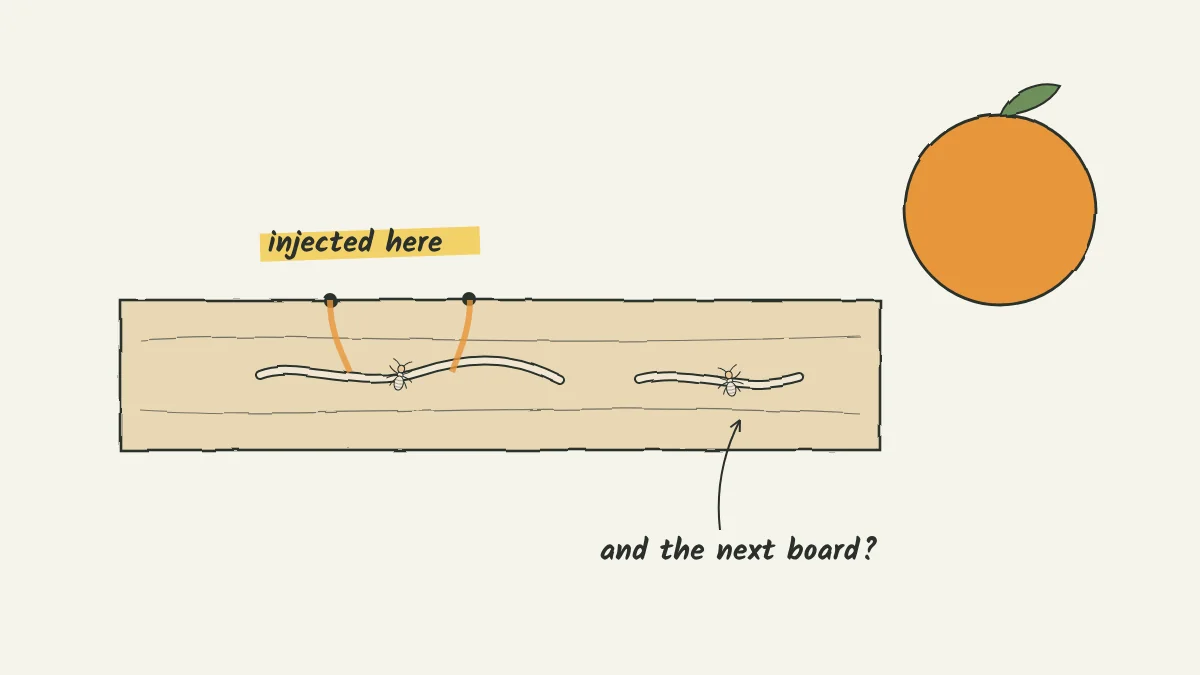
Orange oil (d-limonene) kills drywood termites it touches directly, but only in the boards it's injected into, and its killing power fades within weeks. A UC Riverside study found fresh deposits killed all termites within two weeks, while 60-day-old deposits killed 11 percent. It's a local treatment, not a substitute for tenting.
On this page
What orange oil is
The active ingredient in orange oil is d-limonene, a compound from citrus peel with a lemony smell. It's everywhere in daily life: EPA's review notes it's a food ingredient, a fragrance in soaps and perfumes, and generally recognized as safe as a food additive by the FDA. As a pesticide, it's registered for uses including insecticides and insect repellents.
"Natural" isn't the same as harmless. EPA's assessment lists limonene as a skin irritant and slightly toxic to freshwater fish and invertebrates. Compared with most termiticides, though, its human toxicity is low, which is the main reason people choose it.
For termites, orange oil is used in drywood termite work. The applicator drills small holes into the infested wood and injects the oil into the galleries, where it kills termites by contact. Drywood termites live inside the wood with no soil connection, so if the oil reaches the colony, that colony is in trouble. Subterranean termites are a different story; see the FAQ below.
The UC Riverside study: fast kill, short life
In 2009, UC Riverside researchers Mike Rust and Jody Venturina tested how long localized treatments keep working against the western drywood termite, in a study for California's Structural Pest Control Board. They aged treated wood for different lengths of time, then exposed termites to it. The orange oil product they tested was XT-2000; the comparison was fipronil, sold as Termidor SC.
The pattern is the whole story of orange oil: it kills well when fresh and loses most of its punch within a month.
How quickly orange oil loses strength
Termite mortality on wood treated with orange oil, by how old the treatment was when termites met it. From Rust and Venturina (2009), summarized by UC Cooperative Extension in 2026.
| Age of the treatment | After 7 days | After 14 days | After 26 days |
|---|---|---|---|
| 1 day old | 33% | 100% | 100% |
| 30 days old | 0% | 22% | 50% |
| 60 days old | 0% | 0% | 11% |
For comparison, a 60-day-old fipronil treatment killed 94% on day 1 and 100% by day 7. In the 60-day comparison, untreated termites actually died at a higher rate (61%) than those on 60-day-old orange oil, a sign that the oil had stopped contributing.
The UC Berkeley field test: water did as well
The same year, a UC Berkeley team led by Vernard Lewis tested local drywood treatments in real buildings, 43 field replicates in 14 California cities, again for the Structural Pest Control Board. Instead of counting dead termites, they listened to them, using acoustic emission sensors that pick up termites chewing.
Three months after treatment, the d-limonene product cut termite activity by about 88 percent. That sounds great until you see the other rows. Boards injected with plain water dropped 92 percent. Most products landed in the same range, and the statistics found no significant difference among any of the treatments, water and untreated boards included. The authors' conclusion was that most products reduced feeding, but the reductions couldn't clearly be credited to the products, and that local treatments work best on exposed, accessible boards.
So drilling and injecting may disturb termites regardless of what goes in the hole. That's an argument for caution about every local treatment, not just orange oil, and it's why UC IPM's drywood guide says recent lab and field tests from two universities question the efficacy of d-limonene.
What that means in a real house
Put the two studies together and orange oil looks like this:
- It kills what it reaches, when it's fresh. Termites in a gallery that gets a good dose die within about two weeks.
- It doesn't guard the wood afterward. UC Cooperative Extension's 2026 review points out why residual action matters: treatments are often incomplete in attics where wood can't be reached, and new termites can move in from next door. Orange oil gives little protection against either.
- It treats one board at a time. Like every local method, it only works if the inspector found every colony. Drywood termites are hard to find, and an older house often has several.
UC Cooperative Extension's advice, from Riverside County urban IPM advisor Siavash Taravati, is balanced: orange oil should be a top choice where sustainability and health risks are the priority, and a fipronil or borate product is the better choice where cost and long-term protection of the wood matter most.
Orange oil next to the other drywood options
A quick comparison. The full menu of local methods is in drywood termite treatment, and whole-structure options in termite tenting and heat treatment.
| Orange oil | Other injected products (fipronil, borates) | Tenting or whole-house heat | |
|---|---|---|---|
| Reaches | Boards it's injected into | Boards it's injected into | The whole structure |
| Lasting effect | Fades within weeks (UC Riverside) | Fipronil still killed at 60 days (UC Riverside) | None after the job |
| Move out? | No | No | Yes, for tenting; usually hours for heat |
| Best for | One or two reachable colonies, when low toxicity is the priority | One or two reachable colonies, when long-term protection matters | Many or hidden colonies |
If you're offered orange oil
Do
- Ask how many colonies the inspector found and where
- Ask what happens to the colonies nobody can reach
- Get the treated areas listed on the contract and the completion paperwork
- Ask what the warranty covers if termites come back nearby
- Compare a local quote with a whole-structure quote for the same house
Don't
- Accept a whole-house promise from a local treatment
- Use orange oil for subterranean termites coming up from the soil
- Squirt orange cleaner into kick-out holes; it isn't a termite treatment
- Assume "natural" means nothing to be careful about
Questions people ask
Does orange oil kill termites?
It kills drywood termites it contacts, especially when fresh. In UC Riverside tests, fresh orange oil killed all termites within 14 days, but deposits 30 and 60 days old killed far fewer, so it offers little lasting protection.
Is orange oil as good as tenting?
Not for a house with many or hidden colonies. Orange oil only treats wood it's injected into, while fumigation reaches the whole structure. For one or two colonies an inspector can reach, a local treatment like orange oil can be reasonable.
How long does orange oil termite treatment last?
Not long. In UC Riverside's study, termite kill on 30-day-old orange oil was 50 percent after 26 days and on 60-day-old orange oil 11 percent, so expect little protection after the first few weeks.
Does orange oil work on subterranean termites?
It isn't a subterranean termite treatment. Those colonies live in the soil and are controlled at the soil or with baits, and Texas A&M AgriLife says orange oil has no demonstrated termite control in structures.
Can I use orange oil on termites myself?
Orange oil cleaners aren't termite treatments, and spraying into kick-out holes only reaches the surface. UC IPM says there are no reliable over-the-counter termite products for the public in California, and that local treatments should be applied by licensed applicators.
Keep reading
Termites in your state
Sources
- UC Cooperative Extension Riverside County: Does orange oil work for drywood termite management? (2026)
- UC Berkeley for the Structural Pest Control Board: Field evaluation of localized drywood termite treatments (2009)
- UC IPM Pest Notes: Drywood termites (Publication 7440)
- UC IPM Pest Notes: Termites (Publication 7415)
- U.S. EPA: Limonene tolerance reassessment
- California Code of Regulations, Title 16, section 1999.5: Advertising
- Structural Pest Control Board: Exterminating termites fact sheet
- Texas A&M AgriLife Extension: Frequently asked questions about subterranean termite control