Is Termite Treatment Safe for Pets and Kids?
Most termite treatments go into soil, inside wood or into sealed stations, which keeps them away from the places pets and children spend their time. The risks come from the short windows when they don't: wet soil, open trenches, a curious dog and a bait station, a fish tank in a treated room. Here's what to watch for, treatment by treatment.
The short version
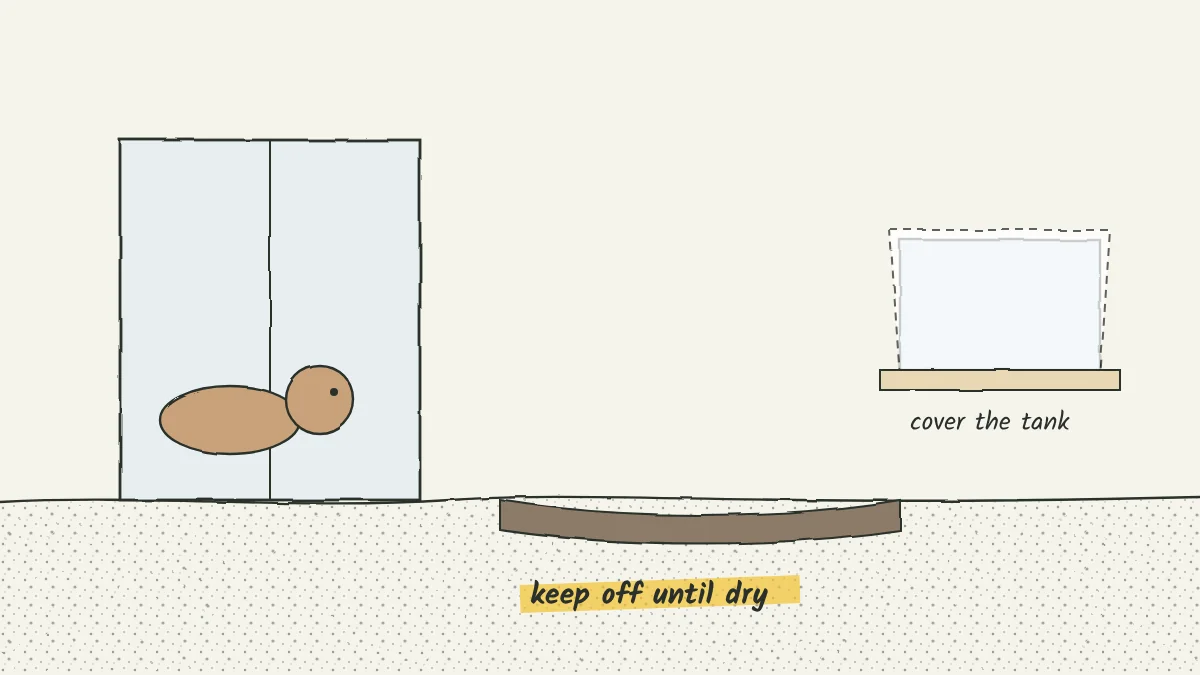
Generally yes, when a licensed applicator follows the label and you follow its precautions. Keep pets and children away from treated soil until it's dry and trenches are filled, protect fish tanks, and don't let pets dig up bait stations. Fumigation is different: everyone, pets included, leaves until the house is cleared. If a pet swallows a product, call Poison Control at 800-222-1222.
On this page
Start with the label
Every termiticide's label sets the precautions for people and pets, and the applicator has to follow it. New Jersey's consumer notice rule shows what that looks like in practice: before applying, a company must give residents the product's safety instructions, which may include leaving for a set time or covering or removing food, dishes and aquariums, along with poison control and pesticide information numbers. Other states don't all require a written notice, but you can always ask for the label.
The National Pesticide Information Center's advice is the same for every product: follow the label, minimize exposure, wash hands after contact, and keep products away from children and pets.
Pets, kids and each kind of treatment
From NPIC fact sheets, Rutgers Extension and state consumer rules. Your product's label is the final word.
| Treatment | Main risk to pets and kids | What to do |
|---|---|---|
| Liquid soil treatment | Wet treated soil and open trenches | Keep pets and kids away until dry and trenches are filled |
| Liquid treatment through a slab or crawlspace | Fumes or spills indoors during treatment | Follow the label on leaving and airing out; protect fish tanks |
| Bait stations | Pets or kids digging up or prying open stations | Ask for tamper-resistant stations; report any that are disturbed |
| Borate wood treatment | Swallowing dust or residue | Keep pets off freshly sprayed wood and away from powders |
| Fumigation (tenting) | The gas itself, until cleared | Everyone, including pets, leaves until the house is certified safe |
| Heat treatment | Heat-sensitive items, not chemicals | Remove pets and follow the company's prep list |
Plenum crawlspaces, the kind used as part of the air system, get special handling in New Jersey, where the rule tells companies to have residents out while the work is done and for a full day afterward.
Dogs, cats and the liquid treatment
The two most common non-repellent termiticides are fipronil and imidacloprid. NPIC says fipronil is more toxic to insects than to people and pets, and that it binds tightly to soil, where half of it breaks down in about 125 days, so it isn't expected to move much. For imidacloprid, NPIC notes that animals that swallowed it have vomited and drooled heavily, and that larger amounts can cause trouble walking, tremors and unusual tiredness.
The practical risk is a dog that digs or drinks from a puddle along the foundation on treatment day. Keep pets inside or leashed away from the treated strip until it's dry and the trench is backfilled. Dog-specific detail for the most common fipronil product is in is Termidor safe.
Fish, birds and bees
Fish are the household pets most sensitive to termiticides. NPIC rates fipronil highly toxic to fish, which is why labels and notices may tell you to cover or remove aquariums in treated rooms. Ask before an indoor or crawlspace treatment, and turn off air pumps that pull in room air if the label says so. NPIC rates fipronil highly toxic to some birds, so move caged birds out of treated rooms too. Outdoors, imidacloprid is very toxic to honeybees; it's applied to soil for termites, not sprayed on flowers, but keep it off blooming plants near the foundation.
Baits, borates and tenting
Bait stations keep the active ingredient inside a sealed plastic cylinder in the ground, which Rutgers Extension notes means less environmental impact. Rutgers also notes the trade-off: stations can be dislodged by people, children or pets. A dog that digs one up should be kept away from the bait, and the company should replace the station.
Borates have low toxicity on skin, but NPIC says swallowing them makes people and animals sick, with signs that can begin within two hours. See boric acid for termites.
Fumigation is the one treatment where everyone, pets included, leaves the house until it's tested and cleared. The steps are in how to prepare for termite tenting.
Treatment day with pets and kids
-
Ask for the label
Read the precautions before the crew arrives, including any time away from the house.
-
Plan where pets will be
Keep them inside, boarded or at a friend's while treatment is underway outside.
-
Protect the fish tank
Cover it or move it out of the treated room if the label or notice says so.
-
Check the yard afterward
Make sure trenches are filled, puddles are gone and stations are closed before pets go out.
-
Keep the numbers handy
Poison Control is 800-222-1222; NPIC is 800-858-7378 for pesticide questions.
Pets and termite treatment
Do
- Read the label precautions before treatment day
- Keep pets off treated soil until it's dry
- Cover or move aquariums as the label directs
- Report disturbed bait stations to the company
Don't
- Let a dog dig along a freshly treated foundation
- Leave a fish tank uncovered in a treated room
- Bring pets home before a fumigated house is cleared
- Leave borate powder where pets can lick it
Questions people ask
Is termite treatment safe for dogs?
Generally, when applied by a licensed professional as the label directs and once treated soil has dried. The risk is a dog digging in or drinking from wet treated soil, so keep pets away until it's dry and trenches are filled.
Is termite treatment safe for cats?
The same precautions apply: keep cats inside and away from treated soil until it dries. If a cat or any pet swallows a product, call Poison Control at 800-222-1222.
Do I need to protect my fish tank during termite treatment?
Often, yes. NPIC rates fipronil as highly toxic to fish, and labels and consumer notices may tell you to cover or remove aquariums in treated areas.
Do pets have to leave during termite tenting?
Yes. Fumigation requires everyone, including pets, to stay out until the house has been tested and cleared for reentry.
Keep reading
Termites in your state
Sources
- National Pesticide Information Center: Fipronil general fact sheet
- National Pesticide Information Center: Imidacloprid general fact sheet
- National Pesticide Information Center: Boric acid general fact sheet (2013)
- Rutgers Cooperative Extension FS338: Termites (2019)
- New Jersey Administrative Code 7:30-9.12: Consumer information
- New Jersey Administrative Code 7:30-10.4: Restrictions on use of termiticides