Do Termites Bite People or Pets?
Finding termites in your house is alarming enough without wondering whether they'll bite you in your sleep. They won't. Termites are built to chew wood and defend their colony from ants, not to bother people. Here's which termites have jaws at all, what a bite would feel like, and why the bugs biting you are probably something else.
The short version
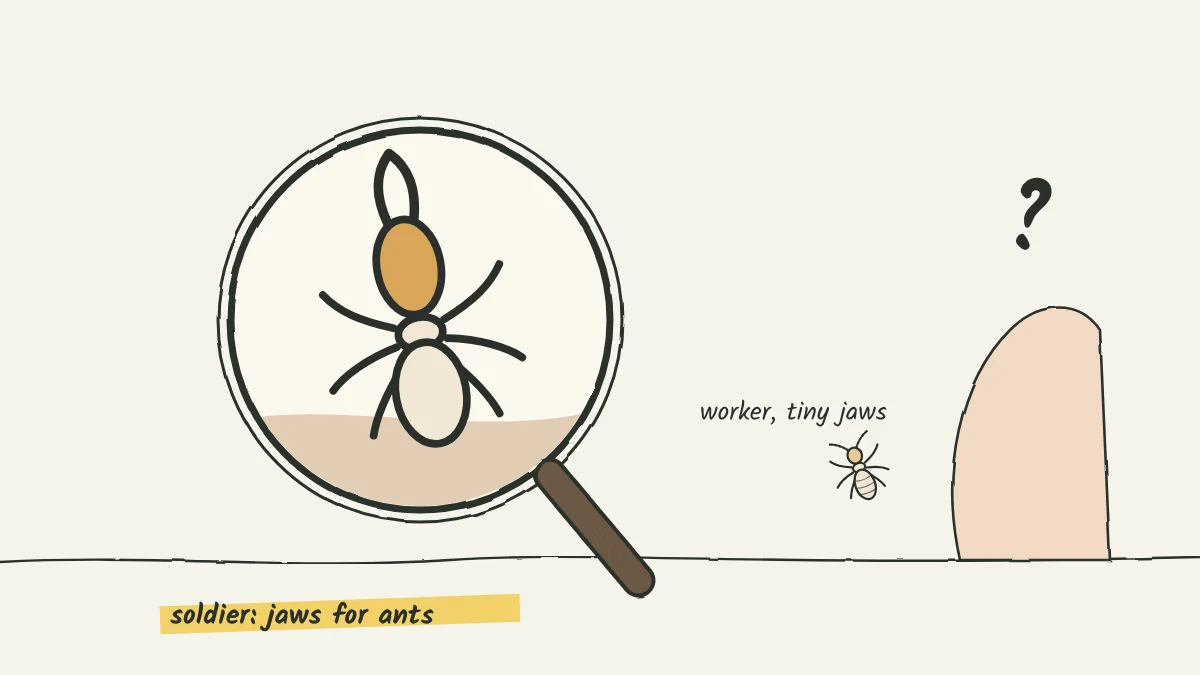
Termites very rarely bite people. Workers have small chewing mouthparts made for wood, swarmers can't bite or damage anything, and only soldiers have big jaws, which they use against ants and other invaders. If a soldier does pinch you, it's mild, carries no known disease risk and fades quickly. Bites you wake up with are far more likely to be fleas, bed bugs, mosquitoes, chiggers or ticks.
On this page
Three kinds of termite, three kinds of mouth
A termite colony has castes, and each one is built for a different job. University of Nebraska–Lincoln's entomology department describes the workers and soldiers as sterile, wingless and usually blind.
Workers do the feeding. They have chewing mouthparts suited to wood, and they're the ones damaging your house, but they're tiny, soft-bodied and spend their lives hidden in soil, mud tubes and wood. You'd rarely touch one unless you broke open a tube.
Soldiers defend the colony. UNL says soldiers defend with large, powerful mandibles adapted for slicing predators, mostly ants. Some termites elsewhere in the world have a different soldier, the nasute, which sprays a sticky substance instead of biting. Dampwood termite soldiers have especially massive mandibles, as a Drexel University image of a soldier's head shows. University of Florida entomologists add that some drywood termite soldiers use their heads to block tunnels.
Swarmers are the winged reproductives. NC State Extension says swarmers don't cause structural damage, which is done by the workers in the colony, and University of Kentucky entomologist Michael Potter notes that indoor swarmers can't damage wood and live about a day.
Which termites could bite?
From UNL, NC State, University of Kentucky and University of Florida extension sources.
| Caste | Jaws | Could it bite you? |
|---|---|---|
| Worker | Small chewing mouthparts for wood | Very unlikely; hidden and tiny |
| Soldier | Large mandibles for fighting ants | Rarely, if handled; mild pinch |
| Swarmer | Not used for biting or chewing wood | No; dies within about a day indoors |
| Queen and king | Stay hidden in the nest | No |
See what do termites look like for the castes up close.
If a soldier does bite
A bite takes effort. You'd have to break open a mud tube or infested wood and handle the soldiers that rush out to defend the breach. Even then, a termite's jaws are small. Healthline's medically reviewed overview calls termite bites extremely rare and very mild, with no disease risk, and says symptoms would look like any minor insect bite: a little redness, swelling, itching or irritation.
Wash the spot with soap and water. See a doctor if symptoms get worse, don't fade, or show signs of infection such as fever, and get emergency help for any trouble breathing, dizziness or lightheadedness after any insect bite or sting, since those can signal an allergic reaction.
For a closer look
As an Amazon Associate I earn from qualifying purchases.
-
10x magnifying loupe
Tells a six-sided drywood pellet from sawdust, and a termite wing from an ant wing.
-
View on Amazon
Nitrile gloves
For bagging swarmers and pellets, and for anything near treated soil.
So what is biting you?
If you're waking up with bites during termite season, the timing is probably a coincidence. Healthline points out that a bite is much more likely to come from fleas, bed bugs, chiggers, mosquitoes or ticks. Each leaves different clues: fleas often bite ankles and have a pet involved, bed bugs leave bites in lines or clusters with spotting on sheets, and chiggers bite where clothing is tight after time outdoors. A pharmacist or doctor can help, and your county extension office can identify an insect sample.
Winged ants can sting or bite, depending on the species, and they swarm at the same time of year as termites. If the insects at your window have pinched waists and elbowed antennae, they're ants. See flying ants vs termites.
What about pets?
Dogs and cats sometimes eat swarmers, which have no sting or venom. A pet digging into a termite-infested stump might get a mild pinch from a soldier, the same as a person. The bigger pet question is usually the treatment, not the termites: soil termiticides and bait stations are what to keep pets away from while they're fresh. See is termite treatment safe for pets.
Termites and bites
Do
- Vacuum up indoor swarmers; they're harmless
- Bag a few for identification
- Look for another cause if you have bites
- Get the house inspected if swarmers came from inside
Don't
- Handle soldiers from a broken mud tube bare-handed
- Spray insecticide on your bed for "termite bites"
- Assume bites mean a termite infestation
- Ignore swelling or breathing trouble after any bite
Questions people ask
Do termites bite humans?
Very rarely. Only soldier termites have large jaws, which they use to fight ants, and a bite would only happen if you handled them. A medically reviewed overview calls such bites extremely rare and very mild, with no disease risk.
Can flying termites bite?
No. Swarmers don't bite or damage wood, and University of Kentucky entomology says indoor swarmers live only about a day.
Do termites bite dogs or cats?
Not in any meaningful way. Pets may eat swarmers, which are harmless, and a soldier could pinch a pet that digs into an infested stump. Termite treatments are the bigger pet concern.
What does a termite bite look like?
Like any minor insect bite: a small red, possibly swollen or itchy spot that fades. If you have bites at home, fleas, bed bugs, mosquitoes, chiggers or ticks are much more likely causes.
Keep reading
Termites in your state
Sources
- University of Nebraska–Lincoln Department of Entomology: Order Isoptera, termites
- NC State Extension: Termite swarmers, what do they mean for you? (Crawley and Hayes, revised 2023)
- University of Kentucky Entomology Entfact-604 on termite control (Potter, revised 2018)
- University of Florida IFAS ENY-211: Drywood and dampwood termites (Oi and others, revised 2008)
- Drexel University via EurekAlert: Head capsule of a dampwood termite soldier (2021)
- Healthline: Termite bites (medically reviewed, 2021)