Beneficial Nematodes for Termites: Hype or Help?
Beneficial nematodes are microscopic worms sold as a natural way to kill soil insects, and termites are often on the list. In a lab dish, they live up to the promise. Under a house, the evidence is much thinner. Here's what researchers have actually found, and why a jar of nematodes isn't a termite treatment.
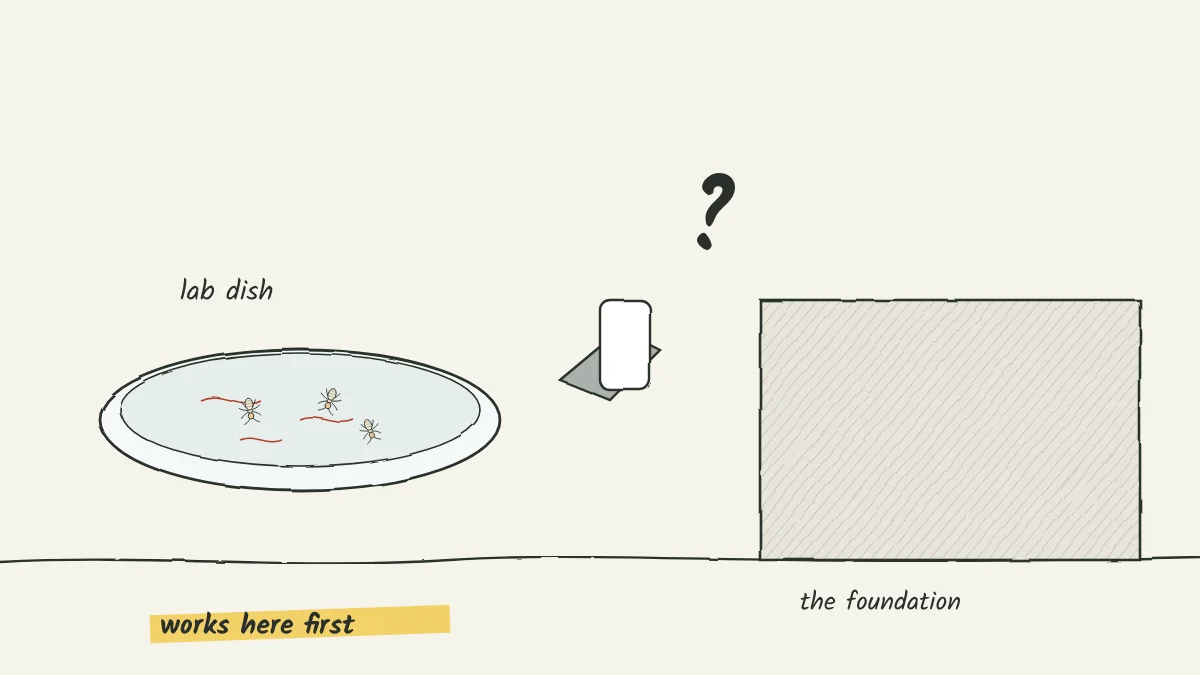
The short version
In laboratory tests, several kinds of beneficial nematodes infect and kill termites, sometimes within days. Field results are another story. In a University of Arizona study, termites avoided nematode-treated areas and reinfested a protected structure after about four weeks. Researchers say field performance still needs to be proven. Nematodes aren't a substitute for a licensed termite treatment.
On this page
What beneficial nematodes are
Entomopathogenic nematodes, the ones sold as "beneficial nematodes," are tiny roundworms that hunt insects in soil. Infective juveniles enter an insect's body, release bacteria that kill it, and reproduce inside. Species such as Steinernema carpocapsae, Steinernema feltiae, Steinernema riobrave and Heterorhabditis bacteriophora are sold for grubs and other soil pests, and termites are a natural target to try.
In the lab, they work
University of Arizona research led by Hao Yu, with entomologists Dawn Gouge and Paul Baker, tested four commercially used nematode species against five termite species, including the eastern subterranean, Formosan and desert subterranean termites. All four nematodes infected and killed all five termites.
The best results were striking. In sand tests at about 72°F, S. riobrave killed more than 90 percent of desert subterranean termites within three days and all of them by day five. A new strain of S. riobrave, described in the Journal of Nematology in 2010, killed 75 percent of eastern subterranean termites and about 91 percent of Formosan termites in seven days, well above a commercially available strain that earlier work had found only poorly to moderately effective against those species.
Lab results vs field results
From Yu's 2009 University of Arizona dissertation and Yu, Gouge and Shapiro-Ilan, Journal of Nematology, 2010.
| Setting | What happened |
|---|---|
| Laboratory, desert subterranean termites | More than 90 percent dead in three days, all dead by day five with S. riobrave |
| Laboratory, eastern subterranean termites | 75 percent dead in seven days with a new S. riobrave strain |
| Laboratory, Formosan termites | About 91 percent dead in seven days with the same strain |
| Choice tests | Termites avoided nematode-treated areas for up to 10 days at high doses |
| Preliminary field test | A structure was protected at first, then reinfested after about four weeks |
The 2010 paper says the new strain's laboratory potential "must be confirmed in studies conducted under field conditions."
In the field, the problems start
A lab dish is the easiest possible test: termites can't leave, the sand is clean and the temperature is controlled. Under a house, every one of those advantages disappears.
The Arizona work found two problems that matter in practice. First, termites avoided nematodes. In choice experiments, they stayed away from nematode-treated areas for up to ten days at high doses, which is the opposite of what a treatment needs: the termites go around it. Second, in preliminary field tests, nematodes protected a structure at first, but termites reinfested after about four weeks, and the author concluded more testing was needed.
The 2010 paper names the bigger obstacles for subterranean termites: reaching all the life stages in a colony, and getting past the colony's defensive behavior. It also notes a general rule of biological control: the nematode that kills best in a lab isn't always the one that works in the field.
What that means for your house
Nematodes are worth watching as research, especially for people looking for alternatives to soil termiticides. As a product you can buy today, the evidence doesn't support them as a termite treatment:
- The research we found doesn't show lasting protection of a house.
- Termites can avoid treated soil and return within weeks.
- They don't leave a residual barrier, so protection depends on living nematodes surviving in the soil.
If you want to limit pesticide use, the better-tested options are bait systems, which put a small amount of insecticide in sealed stations, and prevention: moisture control, no wood touching soil and regular inspections. See termite bait stations and how to prevent termites. For what you can safely do yourself, see DIY termite treatment.
Nematodes and termites
Do
- Use nematodes for the garden pests they're proven against
- Choose baits if you want to minimize soil insecticide
- Get a licensed inspection if you find mud tubes
- Keep moisture and wood away from the foundation
Don't
- Rely on nematodes to stop an active infestation
- Assume a pause in mud tubes means the colony is gone
- Skip the inspection because you treated naturally
- Expect a garden product to carry a termite warranty
Questions people ask
Do beneficial nematodes kill termites?
In the lab, yes. University of Arizona research found four commercial nematode species infected and killed several termite species, some within days. Field protection hasn't been shown to last.
Can I use nematodes instead of a termite treatment?
Not reliably. In a preliminary field test, termites reinfested a nematode-protected structure after about four weeks, and termites avoided nematode-treated soil in choice tests.
What's the best natural termite control?
Prevention is the best-tested: fix moisture problems, keep wood out of soil contact and inspect regularly. Bait systems limit insecticide use to sealed stations, though they still use an insecticide.
Why don't nematodes work as well in the field?
The researchers point to termites avoiding treated soil, the difficulty of reaching every life stage in a colony, and colony defenses, and they note that lab winners don't always perform in the field.