Termites in Ohio: Spring Swarms, Basements and Sale Inspections
Most Ohioans find out they have termites the same way: a swarm of winged insects in the spring, usually at a window. Ohio State's plant diagnostic clinic sees the samples every year. Here's what Ohio's termites do, the signs Ohio State tells people to look for, and the rules for inspections when a house is sold.
The short version
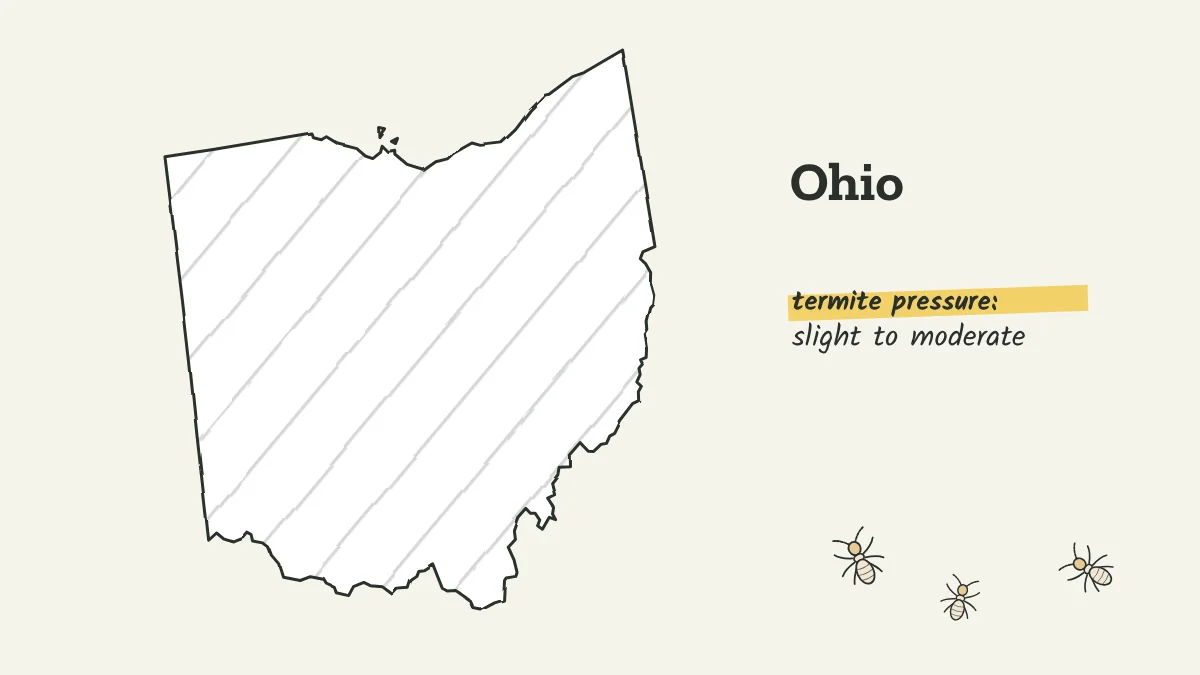
Ohio's termite is the eastern subterranean termite, the most common termite in homes across the state. Ohio State says it swarms over spring and early summer, and swarms are the most common way people discover an infestation. Real estate termite inspections in Ohio are done by licensed commercial applicators on the NPMA-33 form, completed within five business days.
Ohio at a glance
- Termite pressure
- Slight to moderate
- Termites to know
- Eastern subterranean
- Why termites like it here
- Cold winters and warm, humid summers, with native subterranean termites statewide and many older houses on basements.
- Who licenses pest control
-
Ohio Department of Agriculture, Plant Health Division (pesticide regulation)
Check a company's license - Inspection report for home sales
- NPMA-33 Wood Destroying Insect Inspection Report
On this page
Ohio's termite
Ohio State University Extension says subterranean termites are the most common type infesting homes in Ohio, and its Plant and Pest Diagnostic Clinic identifies them as the eastern subterranean termite, the most common and widely distributed termite in the continental U.S. Colonies live in the soil and travel through it to food, sometimes over hundreds of feet, building mud tubes above ground to stay protected from drying air and predators.
The clinic says Ohio termites swarm over spring and early summer. Winter swarms are uncommon, though warmth from a building can occasionally set one off. Swarmers are attracted to light and tend to collect at windows. If you're not sure whether yours are ants, flying ants vs termites shows the differences.
When termites swarm in Ohio
Ohio State says swarms come over spring and early summer, with an occasional winter swarm triggered by a heated building.
| Termite | J | F | M | A | M | J | J | A | S | O | N | D |
|---|---|---|---|---|---|---|---|---|---|---|---|---|
| Eastern subterranean Daytime, often after a warm rain | some swarms | peak | peak | common | some swarms |
Signs Ohio State tells you to look for
From Ohio State's Plant and Pest Diagnostic Clinic.
| Sign | What to know |
|---|---|
| Swarms | The most common way infestations are found |
| Shed wings | On the ground, windowsills and floors near windows |
| Mud tubes | On outer walls and pillars, often near the soil |
| Damaged wood | Galleries that follow the grain, with dirt and fecal spots |
| Lumps on painted wood | Can mark activity just under the surface |
| Damage to soft materials | Leather or foam near infested wood can be chewed too |
Ohio State suggests a moisture meter to help find infested areas. More in signs of termites.
Prevention, Ohio State's way
The clinic's prevention list is short. Remove wood touching soil, seal cracks and crevices, keep mulch at least 6 inches below the foundation top and under 2 inches deep, and keep drainage good: soil sloping away, clean gutters and working downspouts. Ohio State is clear that these cultural steps alone can't remove an active infestation; that takes a certified professional, since only licensed applicators may apply effective termiticides.
Firewood deserves its own line. Ohio State Extension educator Jerry Iles, in Fairfield County, found a tree on his land hollow and full of termites, and advises keeping termite-infested firewood away from the house, stacked off the ground on pallets. See firewood and termites and landscaping to prevent termites.
Treatment options
Ohio State lists two main approaches: soil termiticides, applied by licensed professionals, and bait stations, typically placed about every 10 feet around the building, sometimes with pre-baiting before the active bait goes in. Both require a professional inspection first, to confirm the termite and find where it's active. Compare them in termite treatment options and termite bait stations.
Inspections when a house is sold
Ohio sets rules for termite inspections in real estate transactions. Under Ohio Administrative Code 901:5-11-13, a wood-destroying insect diagnostic inspection for a real estate transaction must be done by a commercial applicator following the practices taught in Ohio's wood-destroying insect diagnostic inspection training program. Findings go on the NPMA-33, which the Ohio Department of Agriculture's Plant Health Division supplies, and where the form's instructions conflict with the rule, the rule wins.
The rule spells out the record: the business, its license number, the inspection date, the address, the applicator's name, license number and signature, the structures inspected, and, for each structure, findings, recommendations with supporting evidence, obstructed areas, previous treatment and attachments. The form must be completed and signed within five business days of the inspection, and a signed copy submitted to the business within ten days. VA loans require a termite report statewide in Ohio. How to read the form is in NPMA-33.
For Ohio homeowners
Do
- Save a few swarmers in a bottle for identification
- Check basement walls, sill plates and rim joists
- Keep mulch thin and below the foundation top
- Ask for the inspector's Ohio license number on a sale report
Don't
- Assume winter means no termites near a warm furnace
- Rely on cultural steps alone for an active infestation
- Stack firewood against the house
- Apply termiticide yourself
Questions people ask
When do termites swarm in Ohio?
Over spring and early summer, according to Ohio State's Plant and Pest Diagnostic Clinic. Winter swarms are uncommon but can happen when a building's heat triggers one.
What termites live in Ohio?
The eastern subterranean termite, the most common termite in Ohio homes and the most widely distributed termite in the continental U.S.
Who can do a termite inspection for an Ohio home sale?
A licensed commercial applicator, following Ohio's wood-destroying insect diagnostic inspection training, under Ohio Administrative Code 901:5-11-13. Findings go on the NPMA-33 form.
Can I prevent termites myself in Ohio?
You can make the house less inviting by removing wood-soil contact, sealing cracks, keeping mulch thin and improving drainage. Ohio State says those steps alone can't remove an active infestation.
Keep reading
Sources
- Ohio State University Plant and Pest Diagnostic Clinic (BYGL): Eastern subterranean termite (2024)
- Ohio State University Extension, Fairfield County: Watch out for termites when cutting firewood (Iles, 2020)
- Ohio Administrative Code 901:5-11-13: Recordkeeping for wood-destroying insect diagnostic inspections for real estate transactions
- Veterans United: VA termite and pest inspections (updated 2026)