Termites in Kentucky: Swarms, Contracts and the Graph
Kentucky termite work comes with paperwork most homeowners never hear about: a contract in duplicate, a consumer disclosure and a graph of the house. That paperwork is your protection. Here's what University of Kentucky entomologists say about spotting and treating termites, and what state rules require of the company you hire.
The short version
Kentucky's termites are eastern subterranean termites, and University of Kentucky entomologists say swarmers usually appear in spring, set off by warm weather and rain. Treatment must be based on an inspection, and every termite job in Kentucky comes with a contract, a consumer disclosure and a graph of the structure. Termite firms are licensed by the Kentucky Department of Agriculture.
Kentucky at a glance
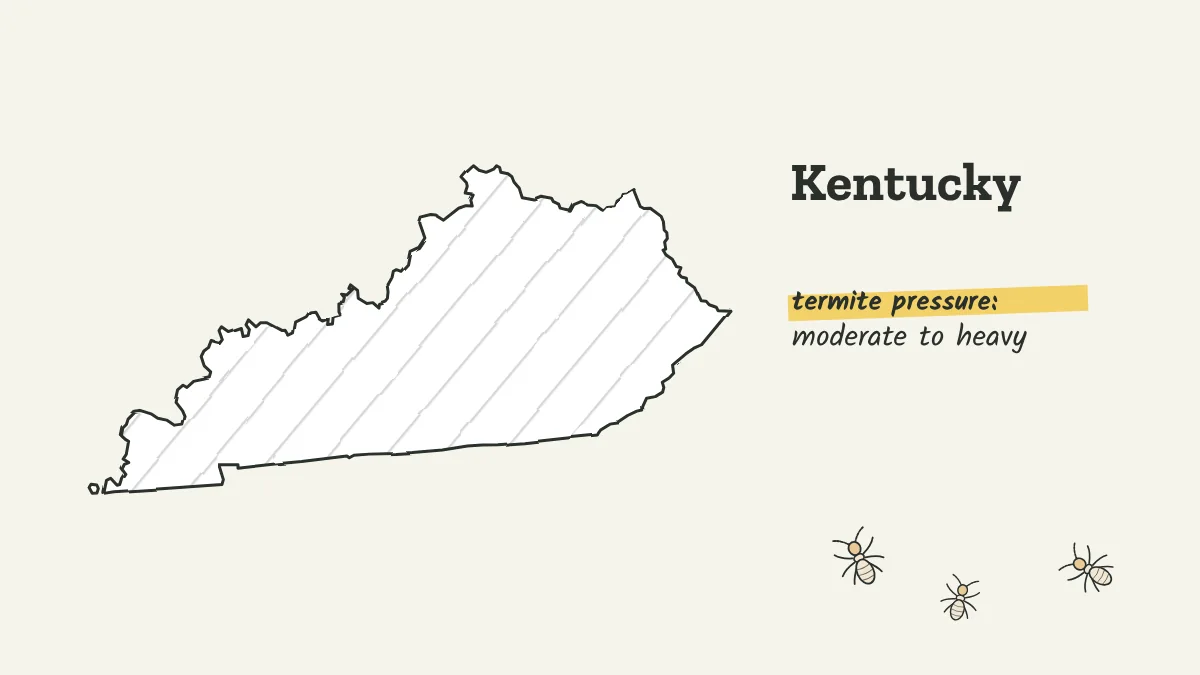
- Termite pressure
- Moderate to heavy
- Termites to know
- Eastern subterranean
- Why termites like it here
- Humid, with hot summers and mild to cold winters, subterranean termites statewide and many older houses on crawlspaces.
- Who licenses pest control
-
Kentucky Department of Agriculture, Structural Pest Control Branch
Check a company's license - Inspection report for home sales
- NPMA-33 Wood Destroying Insect Inspection Report
On this page
What UK entomology says about spotting termites
University of Kentucky extension entomologist Michael Potter's termite fact sheet, Entfact-604, says swarmers typically emerge in spring, triggered by warmer temperatures and rain. Swarmers indoors, often near windows and doors, almost always mean an infestation. Swarmers outdoors from a stump or woodpile don't automatically mean the house is infested, but swarmers next to the foundation or an attached porch or patio are more concerning. Indoor swarmers can't damage wood and live about a day.
Other signs Potter lists: pencil-thick mud tubes on foundations, piers, sill plates or joists; wood hollowed along the grain and lined with dried mud; and tiny holes in drywall or plaster with soil around the edges, or rippled and sunken wall coverings. Potter separates termites from ants by their straight antennae, thick waist and equal-length wings; photos are in flying ants vs termites.
When termites swarm in Kentucky
UK entomology says swarms usually come in spring, after warm weather and rain.
| Termite | J | F | M | A | M | J | J | A | S | O | N | D |
|---|---|---|---|---|---|---|---|---|---|---|---|---|
| Eastern subterranean Daytime, often after a warm rain | some swarms | peak | peak | common | some swarms |
Treatment, the UK way
Potter is direct: termite treatment is a professional job, and do-it-yourself products rarely eliminate an existing problem. Professionals use liquid termiticides, which form a treated zone in the soil and are expected to control termites for at least five years when applied by the label, or baits, cellulose with a slow-acting toxicant in stations set in the ground. Perimeter treatments cover the outside and high-risk interior areas; spot treatments are generally a gamble. Compare them in termite treatment options.
What Kentucky rules require of termite work
From 302 KAR 29:050, the Kentucky Department of Agriculture's structural pest control regulation.
| Rule | What it means for you |
|---|---|
| Treatment based on an inspection | No treatment sold sight unseen, unless the structure is substandard |
| Loose debris and tubes removed first | Raked cellulose under the house and accessible mud tubes come out before treatment |
| Contract in duplicate | One copy for you, one for the company |
| Consumer disclosure and graph | Every contract comes with both |
| Label rates for pretreatment | Pre-construction treatments can't go below label rates |
| New methods need approval | Methods with under five years of efficacy data need written state approval first |
Companies also file a monthly report of termite work with the state. Moisture and fungus treatments in crawlspaces have their own rules; see crawlspace moisture and termites.
Keep the graph
The graph is a sketch of your house showing where and how it was treated. If termites come back, it's how you and the next technician know what was done, and if the state inspects the job, it's part of the record. The Kentucky Department of Agriculture can inspect treated properties for compliance, and a company that doesn't fix violations can have its license suspended, though it may still retreat homes under current contracts. Store the contract, disclosure and graph with your house papers, and pass them on when you sell. See termite bonds for what the contract usually covers.
Licensing and choosing a company
The Kentucky Department of Agriculture's Structural Branch licenses pest control operators, and termite work falls under Category 7A, general pest and termite. Its licensing page doesn't list an online lookup, so call the branch at 502-573-0282 to check a firm.
Potter's advice for choosing: confirm the state license, get inspections and estimates from several companies, check references, and don't let specials or scare tactics rush you. Ask about the warranty. Most companies retreat free if termites return while the renewal is paid, some also cover repairs, and a warranty may not be offered where wells, drainage systems, sub-slab heat ducts or inaccessible crawlspaces prevent proper treatment.
For Kentucky homeowners
Do
- Keep the contract, disclosure and graph together
- Ask what the graph shows before the crew leaves
- Get more than one estimate
- Ask whether a well or sub-slab duct limits the warranty
Don't
- Pay for a spot treatment and call it done
- Sign on the spot because of a special price
- Leave scrap wood under the house before treatment
- Rely on DIY products for an existing infestation
Questions people ask
When do termites swarm in Kentucky?
Usually in spring, triggered by warmer temperatures and rain, according to University of Kentucky entomology. Swarmers indoors almost always mean an infestation.
What paperwork should I get for termite treatment in Kentucky?
A contract in duplicate, a consumer disclosure and a graph of the structure. State rules require all three for termite treatment contracts.
Who licenses termite companies in Kentucky?
The Kentucky Department of Agriculture's Structural Branch. Termite work falls under Category 7A, general pest and termite.
Are spot treatments for termites worth it?
University of Kentucky entomologist Michael Potter calls spot treatments generally a gamble. Perimeter treatments cover the outside and high-risk inside areas.